
Home / Blog / Dryer parts glossary
Dryer Parts Glossary: Every Part Explained
Thirty dryer terms in plain English: what each part does, how it tends to fail and where to read more.
Last reviewed October 1, 2026. Written and reviewed by the Plano Dryer Pros team. How we create content
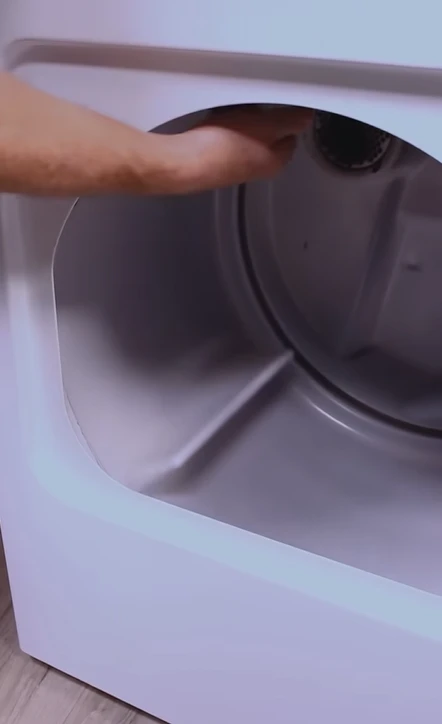
This glossary explains thirty dryer terms in plain English, from the drum, belt, motor and blower to the heater, thermostats, thermal fuse, sensors, switches and vent. Each entry says what the part does and links to the guide with more detail on how it fails and what a repair costs in Plano.
Key takeaways
- Thirty terms, in plain English, with a link to the full guide for each.
- Heat parts, safety parts and airflow parts are the three groups that matter most.
- The thermal fuse and thermostats are safety parts: never bypass them.
- Your model number is the key to matching any part.
The glossary
| Term | What it is | Read more |
|---|---|---|
| Belt | The rubber band that connects the motor to the drum | Belt and rollers |
| Blower wheel | The fan that pulls air through the dryer and out the vent | Motor and blower |
| Bonding strap | A metal strap that ties neutral to the cabinet on a 3-wire hookup | 3-prong vs 4-prong |
| Burner | Where gas mixes with air and burns to heat a gas dryer | Flame sensor and burner |
| Catch | The point on the dryer front that the door latch hooks onto | Door latch |
| Continuity | A complete electrical path through a part, tested with a meter | Troubleshooting FAQ |
| Control board | The electronic brain that runs cycles, heat and sensors | Control board |
| Cycling thermostat | Switches the heat on and off to hold the temperature | Thermostats |
| Door latch | The hook that holds the door shut | Door latch |
| Door switch | Tells the controls the door is closed, and stops the drum when it opens | Door switch |
| Drum | The tub that tumbles the clothes | Drum bearing |
| Drum bearing | A rear support that lets the drum turn smoothly, on some models | Drum bearing |
| Drum glides | Plastic or felt supports at the front rim of the drum, on some models | Drum bearing |
| Drum rollers | Wheels under the drum that carry its weight, on some models | Belt and rollers |
| Exhaust duct | The pipe that carries the exhaust out of the house | Foil vs rigid duct |
| Flame sensor | Confirms the burner has lit on a gas dryer | Flame sensor |
| Gas valve coils | Small electromagnets that open the gas valve when the igniter is hot | Igniter and coils |
| Heating element | The coil that makes the heat in an electric dryer | Heating element |
| High-limit thermostat | A safety stop that cuts the heat if the dryer gets too hot | Thermostats |
| Idler pulley | The spring-loaded wheel that keeps the belt tight | Belt and rollers |
| Igniter | The part that glows to light the gas on a gas dryer | Igniter and coils |
| Lint housing | The channel under the lint screen where air leaves the drum | Lint housing |
| Lint screen | The filter that catches most of the lint | Vent safety |
| Moisture sensor | Metal bars in the drum that tell the dryer when clothes are dry | Moisture sensor |
| Motor | Turns the belt and the blower wheel | Motor and blower |
| Power cord | The cord that brings power to the dryer, 3-prong or 4-prong | Terminal block and cord |
| Start switch | Sends the start signal, as a push-to-start knob or a button | Door switch and start switch |
| Terminal block | Where the power cord connects to the dryer’s wiring | Terminal block |
| Thermal fuse | A one-time safety fuse that blows if the dryer overheats | Thermal fuse |
| Vent hood | The cap on the outside wall where the exhaust leaves | Vent hood |
What is the difference between a thermal fuse and a thermostat?
A thermostat is a switch that opens when the temperature rises and closes again when it cools, so it resets itself. A thermal fuse is a one-time safety part that blows at a higher temperature and must be replaced. Both guard against overheating, and a blocked vent is what usually trips them.
The parts by group
| Group | Parts |
|---|---|
| Heat | Heating element, igniter, gas valve coils, flame sensor, burner |
| Safety | Thermal fuse, high-limit thermostat, door switch, door latch |
| Control | Control board, cycling thermostat, moisture sensor, start switch |
| Drive and airflow | Motor, belt, idler pulley, drum rollers, bearing, glides, blower wheel |
| Power | Power cord, terminal block, bonding strap |
| Vent | Lint screen, lint housing, exhaust duct, vent hood |
Which dryer parts fail most often?
Wear parts such as belts, idler pulleys, drum rollers and thermal fuses usually go first, and they are small repairs. Heating parts, switches and the motor follow, and the control board and drum bearing are costlier and often come later. A blocked vent is behind many failures of the heat and safety parts.
How to find your model number
The model number is on a tag inside the door frame, around the drum opening or on the back of the dryer. It lets a technician or a parts supplier match the right part, so photograph it. See the dryer parts guide.
What is a dryer model number, and why does it matter?
The model number identifies your exact dryer, and it is printed on a tag inside the door frame or on the back. Parts differ between models, even within one brand, so the model number is how the right belt, fuse, element or board is matched. Photograph the tag, and have it ready when you call.
What does continuity mean on a dryer part?
Continuity means electricity can flow through a part, like a closed switch. With the dryer unplugged and the part’s wires disconnected, a meter set to continuity beeps or reads near zero ohms on a good part, and stays silent on an open one. It is the basic test for fuses, switches and thermostats.
Sources
- Your dryer’s installation and service manual, which governs over any general guidance on this page
- Plano Dryer Pros estimates of typical local repair pricing, checked against national consumer cost guides for context. See our Editorial Policy.
Frequently asked questions
Do all dryers have every part listed?
No. Gas dryers have an igniter, gas valve coils, a flame sensor and a burner, and electric dryers have a heating element and a terminal block. Some dryers use rollers, some a bearing, some glides, and older dryers use a timer instead of a control board.
What are the safety parts on a dryer?
The thermal fuse, the high-limit thermostat, the door switch and the door latch. They stop the dryer from overheating or running with the door open, so they are replaced when they fail, never bypassed.
What does OEM mean when buying a dryer part?
OEM means original equipment manufacturer, a part made by or for the dryer’s maker. Equivalent parts are made by others. Ask which a repair uses, and what warranty comes with it.
Where is each part located?
It varies by brand and model, so a parts diagram for your model number is the reliable guide. In general the drive parts are at the bottom, the heat parts at the back, and the airflow parts at the back and bottom.
Which guide should I read first?
Start with the dryer parts guide, which groups parts by symptom, or the symptom checker if you are not sure which part has failed. Each glossary entry links to the guide for that part.
Get your dryer working again
Call and a person will answer, or request a repair online. You get the full price in writing before any work starts.