
Home / Dryer terminal block and power cord
Dryer Terminal Block and Power Cord
Where the power cord meets the dryer, loose connections can overheat. Here are the signs, the 3-wire and 4-wire difference, and when to stop.
Last reviewed October 1, 2026. Written and reviewed by the Plano Dryer Pros team. How we create content
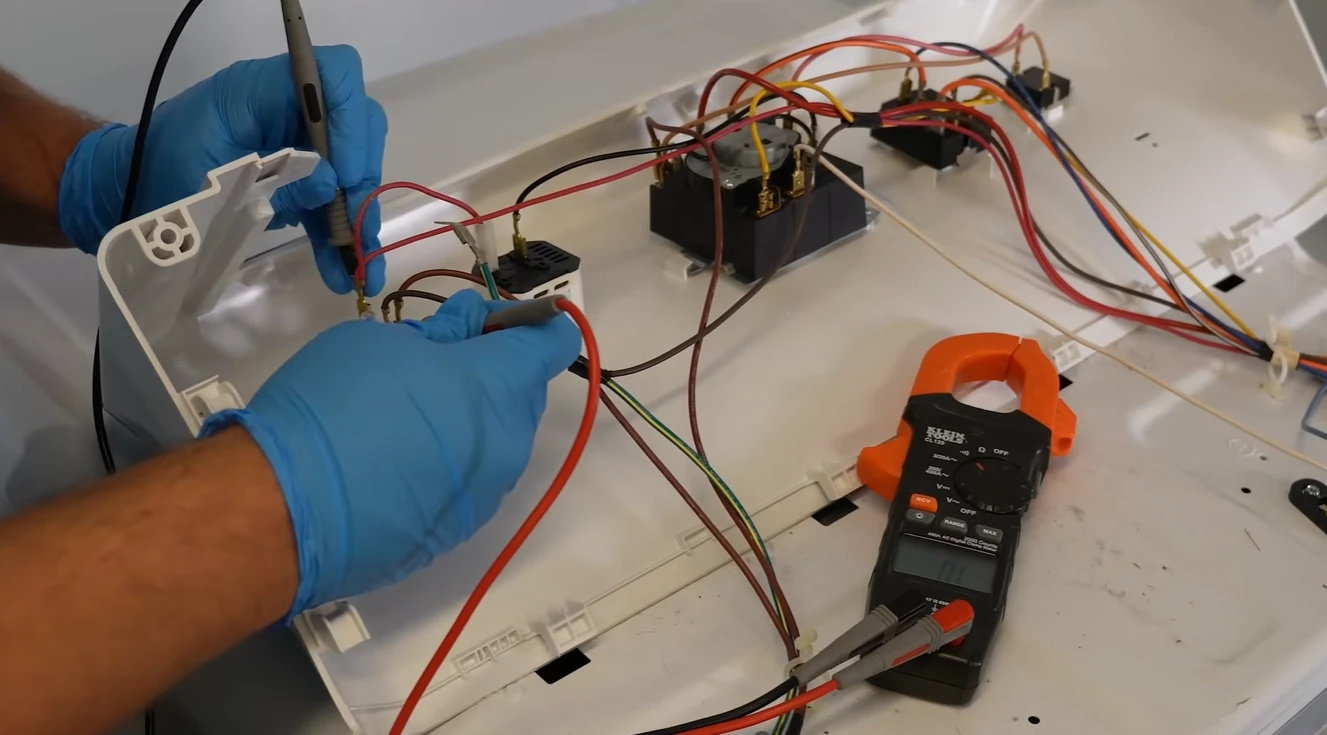
The terminal block is where an electric dryer’s power cord connects to its wiring. A loose or burned connection there can cause no heat, intermittent power, a burning smell or melted plastic, and a cord that does not match the outlet is a safety problem. This is 240-volt work, so unplug the dryer and have it inspected.
Key takeaways
- The terminal block is where the cord meets the dryer, on electric models.
- Burned or melted connections point to a loose lug, which can overheat and start a fire.
- The cord must match the outlet: 3-wire and 4-wire hookups are wired differently.
- Unplug the dryer and call a technician or electrician rather than reconnecting it yourself.
What the terminal block and cord do
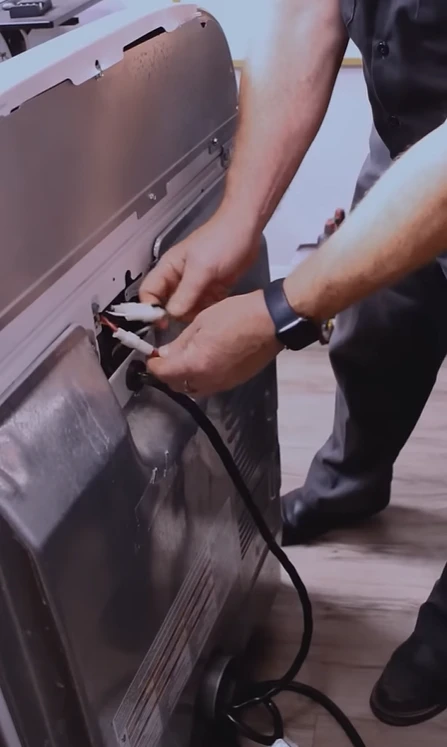
On an electric dryer, the power cord attaches to a terminal block at the back of the dryer, which feeds the 240-volt supply to the heater and the 120-volt supply to the motor and controls. Because the current is high, a loose connection there heats up and can burn the block.
What does a dryer terminal block do?
The terminal block is the point at the back of an electric dryer where the power cord connects to the dryer’s wiring. It feeds the 240-volt supply to the heater and the 120-volt supply to the motor and controls. A loose or burned connection there can cut power to part of the dryer.
Do gas dryers have a terminal block?
Gas dryers run on a standard 120-volt cord and typically do not have the 240-volt terminal block that an electric dryer uses, because the burner provides the heat. The wiring inside differs by model, so the model number matters when a gas dryer has an electrical fault.
Signs of a bad connection
| What you notice | Likely cause |
|---|---|
| Runs, but no heat | One leg of the 240-volt supply not reaching the heater, from a loose or burned terminal |
| Power that comes and goes | A loose lug or a damaged cord end |
| Burning or hot-plastic smell near the back | An overheated connection |
| Discolored, melted or brittle plastic on the block | A connection that has overheated for some time |
| Breaker trips, or a hot plug or outlet | A loose connection, damaged cord or worn outlet |
Why is my dryer terminal block burned?
A burned block usually means a loose connection: a lug that was not tightened, or one that loosened over time, creates resistance, and the current heats the plastic. A cord that does not suit the outlet, or corrosion on the lugs, can do the same. Stop using the dryer and have it inspected.
Can a loose terminal block cause no heat?
Yes. The heater needs both 240-volt legs, and the motor and controls need only one. If one leg is loose or burned at the terminal block, the drum turns and the controls work, but the heater gets no power. That is a common cause of a dryer that tumbles with no heat.
3-wire and 4-wire hookups
| Hookup | How it is wired | Where it is found |
|---|---|---|
| 3-wire (3-prong cord) | Two hot wires and one combined neutral and ground. A bonding strap ties the neutral terminal to the dryer cabinet. | Older homes and older dryers |
| 4-wire (4-prong cord) | Two hot wires, a neutral and a separate ground. The bonding strap is removed. | Newer installations |
What is the bonding strap on an electric dryer?
On a 3-wire hookup, a metal strap ties the neutral terminal to the dryer cabinet. On a 4-wire hookup the strap is removed and a separate ground wire is used. Getting this wrong can leave the cabinet energized, so it should be set by a qualified person, with the cord matched to the outlet.
Why this is electrical work
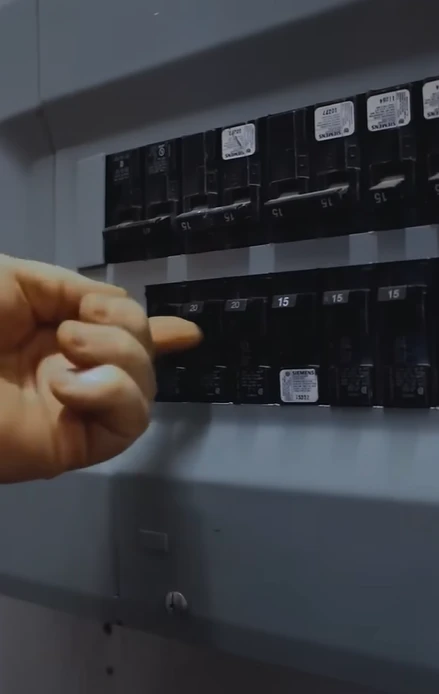
The terminal block sits on the 240-volt supply, so a mistake can shock or start a fire. Unplug the dryer or switch off its breaker before anyone opens the back, and leave the work to a technician or electrician. The outlet and circuit belong to an electrician, as in the electric dryer FAQ.
Can I replace a dryer power cord myself?
Some people do, but the cord must match the outlet, be secured with its strain relief and have its lugs tightened properly, and the bonding strap set for a 3-wire or 4-wire hookup. A mistake can overheat the connection. If you are not sure, have a qualified person do it, and check the outlet at the same time.
How much does a terminal block or cord repair cost?
It depends on the part and on any wiring damage, so there is no typical figure to quote safely. A terminal block or cord is usually a small part, but burned wiring or an overheated outlet can add to the job. Ask for the price in writing, and for what was found.
Sources
- Your dryer’s installation and service manual, which governs over any general guidance on this page
- Plano Dryer Pros estimates of typical local repair pricing, checked against national consumer cost guides for context. See our Editorial Policy.
Frequently asked questions
Is a burned terminal block dangerous?
Yes. It means a connection has been overheating, and that can melt the plastic and ignite lint or wiring nearby. Stop using the dryer, unplug it and have it inspected before it is used again.
Can I use a 3-prong cord on a 4-prong outlet?
No. The cord must match the outlet. An adapter is not a safe fix, and mixing them can leave the dryer without a proper ground. Have an electrician change the outlet or have the cord fitted to match.
How do I know which cord my dryer needs?
Look at your outlet: three slots mean a 3-prong cord, and four slots mean a 4-prong cord. The dryer often ships without a cord for that reason. The cord also needs the right amperage rating, so check your manual.
Should the outlet be checked when the terminal block burned?
Yes. A burned block can be a sign of a loose or worn connection at the outlet or plug, and a scorched outlet should be inspected by an electrician. Replacing only the block can leave the real fault in place.
Can a loose cord cause the breaker to trip?
It can, if a loose or damaged connection arcs or shorts. A breaker that keeps tripping is a sign of a fault. Stop using the dryer and have the cord, terminal block and outlet inspected.
Who should repair the terminal block?
A dryer technician can replace the terminal block and cord on the dryer. The outlet, the breaker and the circuit wiring belong to a licensed electrician. If both are involved, each handles its own side.
Get your dryer working again
Call and a person will answer, or request a repair online. You get the full price in writing before any work starts.