
Home / Dryer parts guide
Dryer Parts Guide: What Fails and Why
Every dryer repair comes down to a short list of parts. See what each one does, how it fails, and what the repair typically costs.
Last reviewed September 30, 2026. Written and reviewed by the Plano Dryer Pros team. How we create content
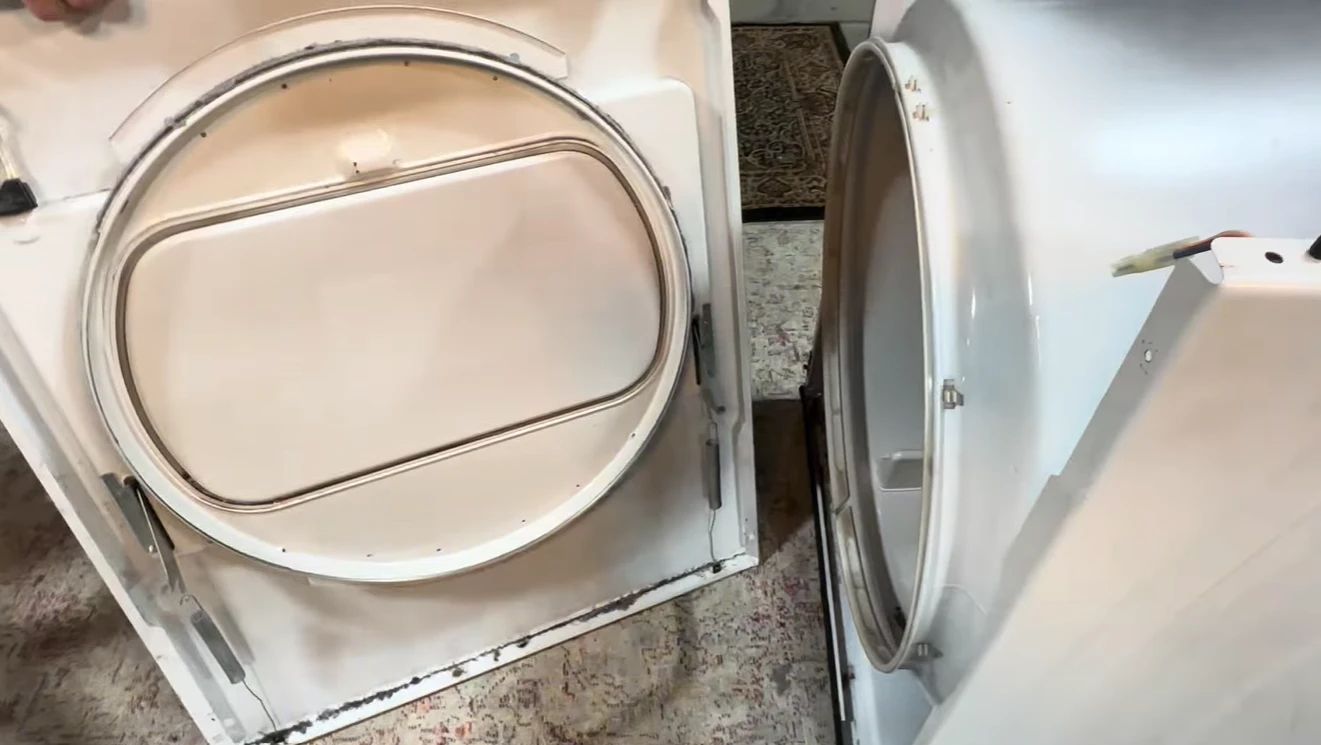
Most dryer repairs involve a short list of parts: the heating element or gas igniter, thermal fuse and thermostats, drive belt and idler pulley, drum rollers, motor, switches and the control board. Each fails in a recognizable way, so the symptom usually points to the part. Use this guide to match your symptom to the part.
Key takeaways
- Seven groups of parts cause nearly all dryer repairs.
- A symptom usually points to the part, so start with what the dryer is doing.
- Airflow problems sit behind many failed heat parts, so check the vent too.
- Parts are specific to your model number, which is on a tag inside the door frame or on the back.
The parts that fail most
This table shows each part, the symptom it causes, and what a repair typically costs in Plano. Open the guide for any part you suspect.
| Part | Symptom when it fails | Typical cost | Guide |
|---|---|---|---|
| Heating element (electric) | Drum spins, no heat | $200 to $350 | Heating element |
| Gas igniter or valve coils | Gas dryer, no heat or no flame | $200 to $375 | Igniter and coils |
| Thermal fuse and thermostats | No heat, or the dryer will not start | $150 to $275 | Fuse and thermostats |
| Belt, idler pulley, drum rollers | Squeal, thump, or the drum will not turn | $200 to $375 | Belt and rollers |
| Door switch and start switch | Will not start, or stops mid-cycle | $150 to $250 | Door switch and start switch |
| Motor, blower wheel, drum bearing | Hum, grinding, weak airflow | $300 to $550 | Motor and blower wheel, drum bearing |
| Control board | Random stops or no response | $300 to $600 or more | Control board |
What are the main parts of a dryer?
A dryer has a drum that holds the clothes, a motor and belt that turn it, and a blower that pulls air through. Heat comes from an electric element or a gas burner with an igniter. Thermostats and a thermal fuse protect it, switches and a control board run it, and the vent carries the moist air out.
Heat parts
On an electric dryer the heating element makes the heat. On a gas dryer the igniter, gas valve coils and flame sensor light the burner. Both are protected by the same thermostats and thermal fuse. If the drum spins and the air stays cold, start with the not-heating checks.
Motion and noise parts
The motor turns the drum through a belt held tight by the idler pulley, and the drum rides on rollers. Worn parts squeal, thump or grind, and a broken belt leaves the motor running while the drum sits still.
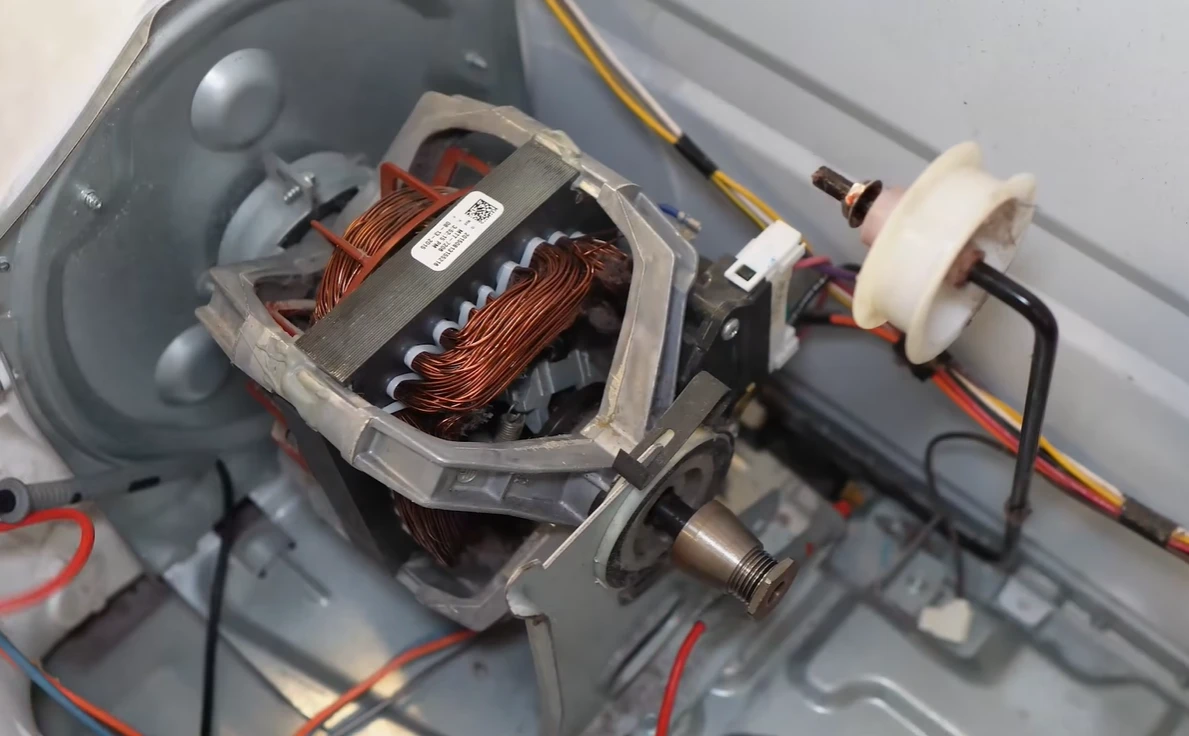
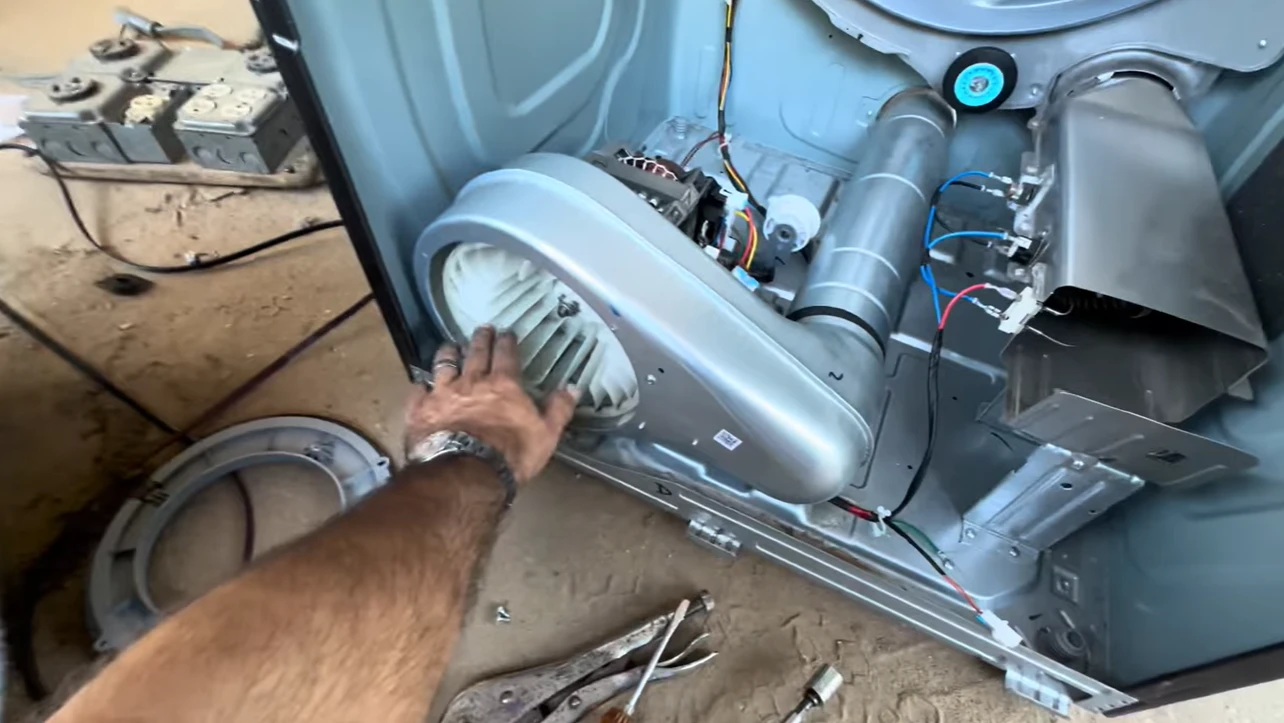
Safety and control parts
The thermal fuse, thermostats and door switch are safety parts. The start switch and control board tell the dryer what to do.
Which dryer parts are safety parts?
The thermal fuse, the high-limit thermostat and the door switch are the main safety parts. The fuse and thermostat cut power or heat when the dryer overheats, and the door switch stops the drum when the door opens. They should be replaced, never bypassed, and a blown one usually points to a blocked vent.
Airflow parts
The lint screen, blower wheel, exhaust duct and outside hood are not glamorous, but they decide how hot the dryer runs. Restricted airflow is the hidden cause of many failed parts.
Which dryer part fails most often?
It depends on the type, but heat parts and wear parts lead the list: heating elements, igniters, thermal fuses, belts and idler pulleys, and drum rollers. Many of these are driven by restricted airflow, which is why a blocked vent sits behind so many repairs. Clearing the vent is the cheapest fix and often prevents repeats.
Match your symptom to the part
| What the dryer is doing | Most likely part | Read |
|---|---|---|
| Runs, no heat (electric) | Breaker, thermal fuse, thermostat or heating element | Dryer not heating |
| Runs, no heat (gas) | Igniter, gas valve coils or flame sensor | Igniter and coils |
| Squeals or thumps | Idler pulley, belt or drum rollers | Noisy dryer |
| Drum will not turn, motor runs | Drive belt | Belt and rollers |
| Dead, or hums with no spin | Door switch, start switch, fuse or motor | Won’t start |
| Stops before the cycle ends | Thermostat, door switch or moisture sensor | Stops mid-cycle |
| Takes two cycles to dry | Usually the vent, not a part | Takes too long to dry |
Are dryer parts interchangeable between brands?
Generally no. Most dryer parts are specific to a brand and model, and sometimes to a production range, so the model number on the tag inside the door frame or on the back is the key to the right part. A part that looks similar can have different connectors, sizes or ratings, so match the number rather than the look.
Choosing and fitting parts
The right part depends on the exact model, so have the model number ready before you buy or book.
Should I use OEM parts for a dryer repair?
OEM parts are made to the manufacturer’s specification and fit the model exactly, which is why many technicians prefer them for safety parts such as fuses and thermostats. Quality aftermarket parts exist for some components. Ask what will be used, and ask how the warranty covers the part and the labor.
Can I replace a dryer part myself?
Simple jobs like a belt or a lint housing are within reach for some people, but an electric dryer carries 240 volts and a gas dryer has a gas connection. Unplug the dryer, close the gas valve, and use the manual. If you are not sure which part has failed, have a technician test it first.
Repair or replace the dryer?
Small parts on a dryer under about 10 to 12 years old are usually worth fixing. A major part on an older dryer may not be. See the repair or replace guide and the dryer repair cost guide.
Sources
- National Fire Protection Association, Clothes Dryers and Washing Machines fact sheet (2010 to 2014 annual averages)
- Your dryer’s installation and service manual, which governs over any general guidance on this page
- Plano Dryer Pros estimates of typical local repair pricing, checked against national consumer cost guides for context. See our Editorial Policy.
Frequently asked questions
How do I find the right part number for my dryer?
Start with the model number on the tag inside the door frame or on the back of the dryer. Give that number to a parts supplier or technician, who can match it to the exact part. The part itself often carries a number too, but the model number is more reliable.
Are used or refurbished dryer parts worth buying?
Used parts can work for cosmetic or non-safety pieces, but they carry more risk and usually no real warranty. For safety parts such as thermal fuses, thermostats and heating elements, new parts are the safer choice, because a worn part can fail again or fail unsafely.
How long do dryer parts last?
It varies by part and by how hard the dryer is worked. Belts, rollers and igniters wear with use, while fuses, thermostats and elements fail early when the vent is restricted. Dryers commonly last about 10 to 15 years, and a clean vent and lint screen help the parts last.
Why do the same dryer parts keep failing?
Repeat failures usually point to an underlying cause that was never fixed, most often restricted airflow or overheating. A fuse or element replaced without clearing the vent can fail again within weeks. A second fault elsewhere can also be the reason, so a proper test matters.
Is it cheaper to buy the part and fix the dryer myself?
It can be, for simple parts and if you are confident working on appliances. The risk is buying the wrong part, missing a second fault, or working around 240 volts or gas. A technician’s diagnosis costs money, but it avoids paying twice for the wrong part.
What does a dryer part cost compared with the whole repair?
Parts are often only part of the bill, because the diagnosis and labor can cost as much as a smaller part. That is why typical repairs run about $150 to $400 in the Plano area. Use the cost guide for typical ranges by repair, and ask for the price in writing.
Get your dryer working again
Call and a person will answer, or request a repair online. You get the full price in writing before any work starts.