
Home / Dryer troubleshooting FAQ
Dryer DIY and Troubleshooting FAQ
Twenty-eight short answers on what to check first, how to test safely, what the symptoms mean and when to stop and call.
Last reviewed October 1, 2026. Written and reviewed by the Plano Dryer Pros team. How we create content
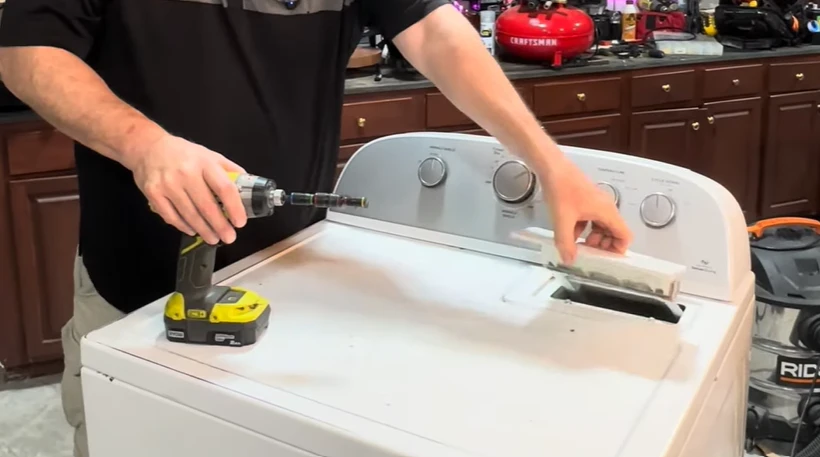
This dryer troubleshooting FAQ answers 28 questions on first checks, heat problems, drying time, noise, smells, testing parts safely and when to call a technician. Start with the free checks: breaker, door, control lock, lint screen and vent. If you smell gas, leave the house and call 911 and Atmos Energy at 866.322.8667.
Key takeaways
- Start with the free checks: breaker, door latch, control lock, lint screen and vent.
- A meter test beats guessing, but only with the dryer unplugged and the part disconnected.
- Never bypass a thermal fuse, thermostat or door switch.
- Stop and call for gas, burning smells, burned wiring or anything on the 240-volt or gas side.
First checks
Why won’t my dryer turn on at all?
Start with power: the breaker, with both halves on an electric dryer, the plug and the outlet. Then check the door latch, the control lock and the Start button. If all of those are fine, a door switch, a start switch or a blown thermal fuse is next. See dryer won’t start.
How do I reset a dryer?
Most dryers have no reset button. To reset the electronics, switch the breaker fully off, wait a minute, then switch it back on, or unplug the dryer for a minute. If it trips again or stays dead, there is a fault, so stop and have it checked rather than resetting repeatedly.
What is the control lock on a dryer?
It is a feature that disables the buttons so children cannot change a cycle. On many dryers you turn it off by holding a button for a few seconds, and the manual shows which one. A dryer that ignores every button may simply have the lock on, so check it before anything else.
Why does my dryer start but stop after a few minutes?
Often overheating from restricted airflow, which trips a thermostat, or a door switch that loses contact when the door shifts. A dirty moisture sensor can also end a cycle early. Check the vent and the door first. See dryer stops mid-cycle.
How do I find my dryer’s model number?
Look for a tag inside the door frame, around the drum opening or on the back of the dryer. Photograph it. The model number lets a technician or a parts supplier match the right part, so it is the most useful detail to have ready when you call.
What are the first five things to check when a dryer stops working?
Check the plug and the breaker, the door latch, the control lock, the lint screen and vent, and the load size and cycle setting. These five steps are free and solve a large share of calls. If none helps, note exactly what the dryer does, because the symptom points to the part.
Heat problems
Why does my dryer spin but not heat?
The usual causes are a half-tripped breaker, a blown thermal fuse, a failed thermostat, and on electric dryers a burned-out heating element or, on gas dryers, a weak igniter or valve coils. A meter test finds which one. See dryer not heating.
How can I tell if the element or the thermal fuse failed?
Test both for continuity with a meter, with the dryer unplugged. A blown thermal fuse shows no continuity, and so does a burned-out element. If both test fine, the thermostats or the controls are next. A visible break in the element coil is also a clear sign.
Why is my dryer hot but the clothes are still damp?
The air is hot but the moisture is not leaving. Restricted airflow is the usual reason: a packed lint screen, a crushed duct or a blocked hood. A sensor coated with softener can also end the cycle early. Run the ten-minute vent test, and clean the lint screen and sensor.
Why does my dryer get too hot?
Overheating usually means heat is trapped by a blocked vent, or a cycling thermostat is stuck closed. Stop using the dryer if the cabinet is very hot or you smell burning. Clear the vent, then have the thermostats tested. See thermostats explained.
How can I tell whether my gas dryer is lighting?
Watch for the igniter to glow through the burner window, if there is one, followed by a flame. If it glows and no flame follows, the gas valve coils are a common cause. Never light a gas dryer by hand, and if you smell gas, leave the house and call 911.
Drying time and noise
How long should a dryer cycle take?
A normal load usually dries in about 30 to 60 minutes, depending on the load, the setting and the airflow. If a cycle takes far longer, or clothes need two cycles, the vent is the first suspect. See takes too long to dry.
How do I find where a squeak is coming from?
With the dryer unplugged, turn the drum by hand: a rough or grinding feel points to a roller or bearing. A squeal that follows the motor points to the idler pulley or belt, and a squeal at the front points to glides. A technician listens and checks each part.
Why does my dryer rattle?
A coin, zipper or button in the drum or lint housing is the usual cause. Loose panels, a dryer that is not level and a lint-packed blower can also rattle. Empty your pockets, check the lint housing, make sure all four feet sit firmly and tighten any loose panel.
Why do clothes come out covered in lint?
Lint on clothes can come from new towels or a clogged lint screen, or from an overloaded drum. Clean the screen every load, wash it a couple of times a year, and make sure the vent is clear. Heavy lint producers are best washed separately.
Does overloading the dryer cause problems?
Yes. An overloaded drum strains the belt, rollers and motor, leaves clothes damp and can trip the thermostats. Keep loads loose enough that clothes tumble freely, and split large loads. It is one of the simplest ways to make a dryer last longer.
Smells and safety
Is it safe to run a dryer that smells hot?
No. A hot or burning smell can mean lint scorching, a slipping belt or overheating wiring. Stop the dryer, unplug it, and do not use it again until it has been checked. See dryer smells like burning for how to tell the causes apart.
What should I do if I smell gas near my dryer?
Leave the house at once, avoid switches, and from a safe distance call 911 and Atmos Energy at 866.322.8667. Do not look for the leak, and do not go back in until you are told it is safe. See what to do if you smell gas.
Is it normal for a dryer to feel hot on the outside?
The cabinet can feel warm during a cycle. A cabinet that is very hot to the touch, or a laundry room that feels hot and humid, suggests heat is not leaving through the vent. Stop and check the vent before the next load.
Is it safe to run the dryer when I am out?
Many fire safety guides advise against it, because a lint or heat problem can start a fire with nobody there to notice. Run the dryer when you can check on it, keep the vent clear and make sure the smoke alarms near the laundry area work.
Tools and testing
What does continuity mean, and how do I test it?
Continuity means electricity can flow through a part, like a closed switch. With the dryer unplugged and the part’s wires disconnected, set a meter to continuity and touch the probes to the terminals. A beep or a reading near zero ohms means continuity, and no beep means the part is open.
What kind of multimeter do I need?
A basic multimeter with a continuity setting and a resistance setting is enough for most dryer tests. You do not need an expensive one. It must be used with the dryer unplugged, and it is only for testing parts that have been disconnected.
Is it safe to test dryer parts myself?
Only with care. Unplug the dryer or switch off its breaker, close the gas valve on a gas dryer, and disconnect the part before you test it. An electric dryer carries 240 volts. If you are not comfortable, a technician’s diagnosis is a safer choice. See the DIY or pro guide.
Where should I buy a replacement part?
Use the full model number to match the part, and buy from a supplier that lists the part for your model and gives a return policy. Beware of parts that merely look similar. A technician can supply the right part, with a warranty, which is worth asking about.
Should I take photos before disconnecting wires?
Yes. Photograph the wiring before you disconnect anything, and label the wires if they look alike. A clear photo makes reassembly safe and quick, and it helps a technician if you need to call one. Never reconnect wires you are unsure of.
When to call for help
When should I stop and call a technician?
Stop if you smell gas or burning, find burned wiring, do not know which part has failed, or need to open the 240-volt or gas side. Also stop if the same part keeps failing, because that points to an underlying cause such as a blocked vent.
How much does a dryer diagnosis cost?
Many companies charge a service call or diagnostic fee, and policies vary, so ask when you book and whether it is credited toward the repair. Typical Plano repairs run about $150 to $400, parts and labor included. See the repair cost FAQ.
What happens at a dryer repair visit?
The technician checks the power and the vent, tests the failed circuit with a meter, tells you what failed, and gives you the price in writing before replacing anything. The repair is then done, and the dryer is tested. See how dryer repair works.
Sources
- Your dryer’s installation and service manual, which governs over any general guidance on this page
- Plano Dryer Pros estimates of typical local repair pricing, checked against national consumer cost guides for context. See our Editorial Policy.
- Atmos Energy gas emergency guidance (866.322.8667)
Get your dryer working again
Call and a person will answer, or request a repair online. You get the full price in writing before any work starts.