
Home / How a dryer works
How a Dryer Works: Every Part Explained
Heat, airflow and a turning drum. Here is how they work together, part by part, and what goes wrong when one of them lets go.
Last reviewed October 1, 2026. Written and reviewed by the Plano Dryer Pros team. How we create content
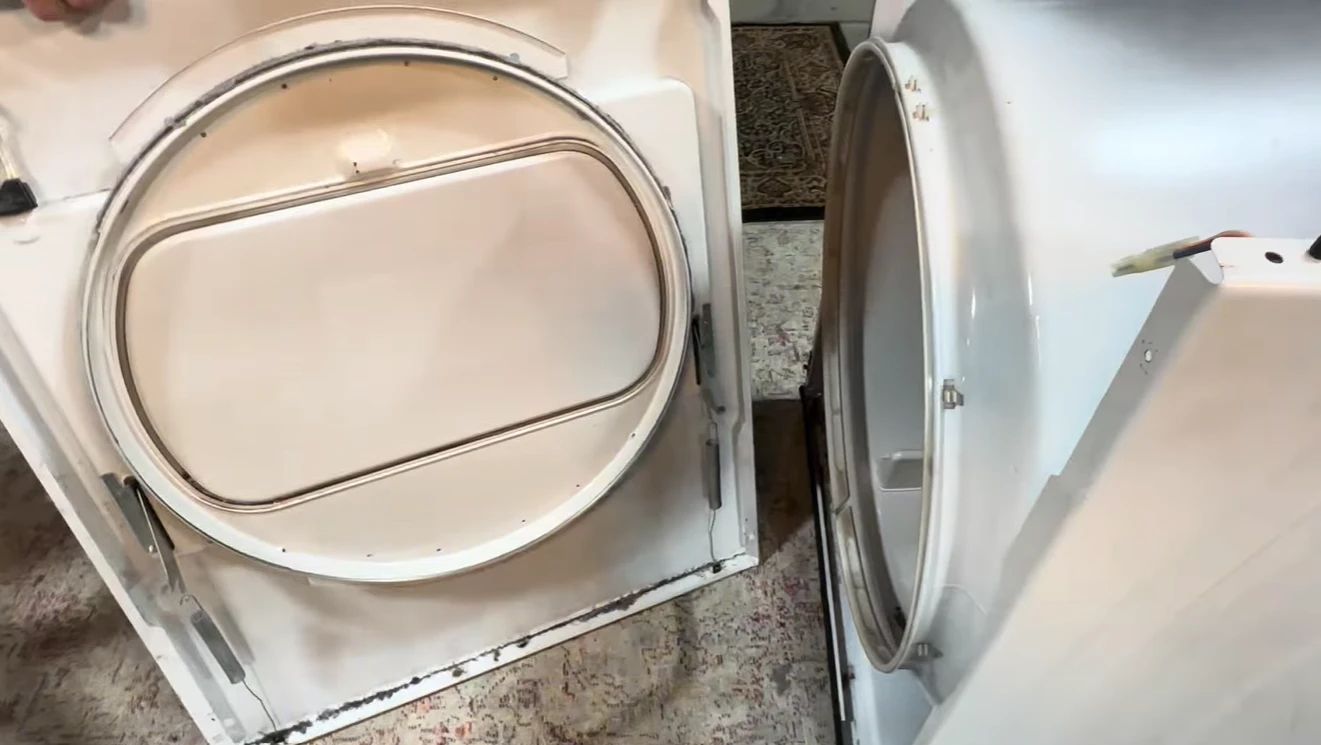
A dryer dries clothes by tumbling them in a drum while hot air flows through. A motor turns the drum through a belt and spins a blower that pulls air past a heater, through the clothes and out the vent. Thermostats and a thermal fuse protect it, and a timer or moisture sensor ends the cycle.
Key takeaways
- Drying is hot air carrying moisture out of the drum and through the vent, not heat alone.
- One motor turns the drum and spins the blower, so a motor fault stops both.
- Thermostats and a thermal fuse watch the temperature, and a blocked vent is what trips them.
- Every part has its own guide, linked below.
The cycle, step by step
- You press Start. The door switch must be closed, or the dryer will not run.
- The motor starts, turning the drum through a belt and spinning the blower wheel.
- The blower pulls room air in and across the heater, which is an electric element or a gas burner.
- Hot air passes through the tumbling clothes and picks up moisture.
- The air carries lint through the lint screen, which catches most of it.
- The blower pushes the humid air through the exhaust duct and out the vent hood.
- Thermostats cycle the heat and a high-limit thermostat and thermal fuse guard against overheating.
- A timer or a moisture sensor ends the cycle, and the drum keeps turning for a cool-down.
How does a dryer dry clothes?
A dryer tumbles clothes in a drum while a blower pulls heated air through them. The hot air picks up moisture and carries it out through the vent, which is why airflow matters as much as heat. The drum turns so the air reaches every part of the load, and a timer or sensor ends the cycle.
The parts and what each does
| Part | Its job | If it fails | Guide |
|---|---|---|---|
| Drum and supports | Holds the clothes and turns smoothly on rollers, a bearing or glides | Grinding, thumping or scraping | Drum bearing |
| Belt and idler pulley | Connect the motor to the drum and keep the belt tight | Squealing, or a drum that will not turn | Belt and rollers |
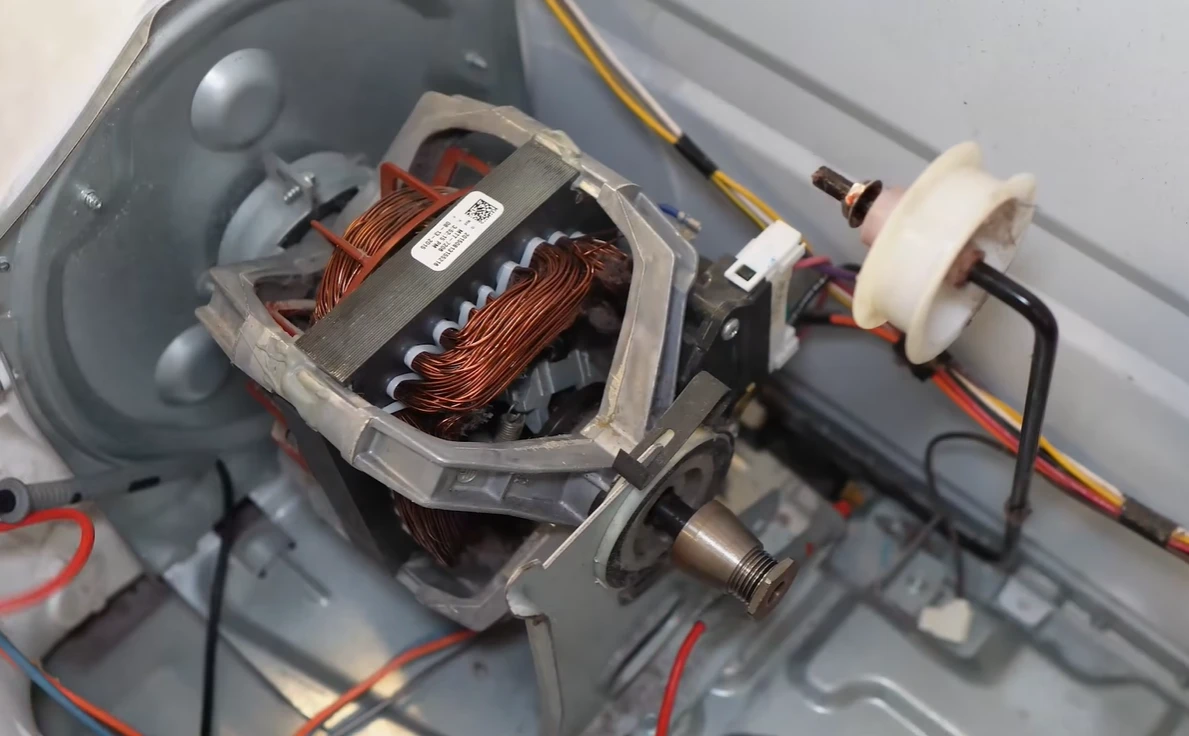
| Motor | Turns the belt and the blower wheel | Hum with no spin, or stops and restarts | Motor and blower |
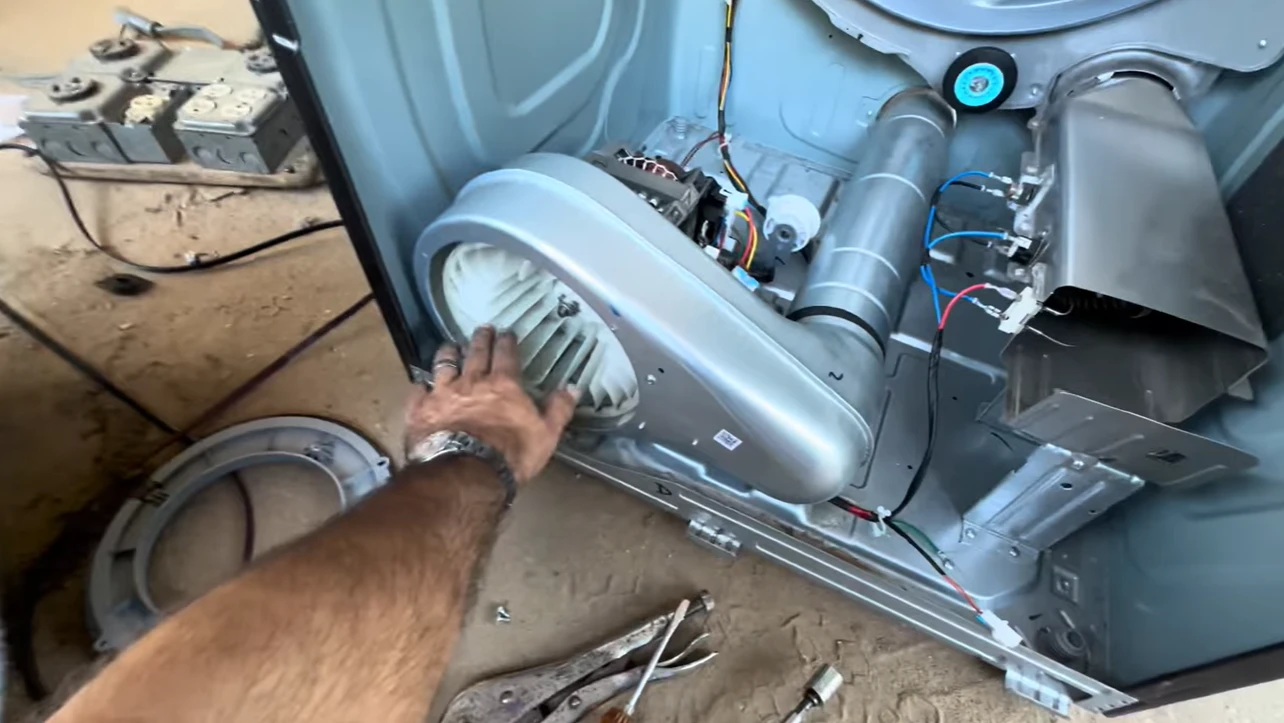
| Blower wheel | Pulls air through the dryer and out the vent | Weak airflow and noise | Motor and blower |
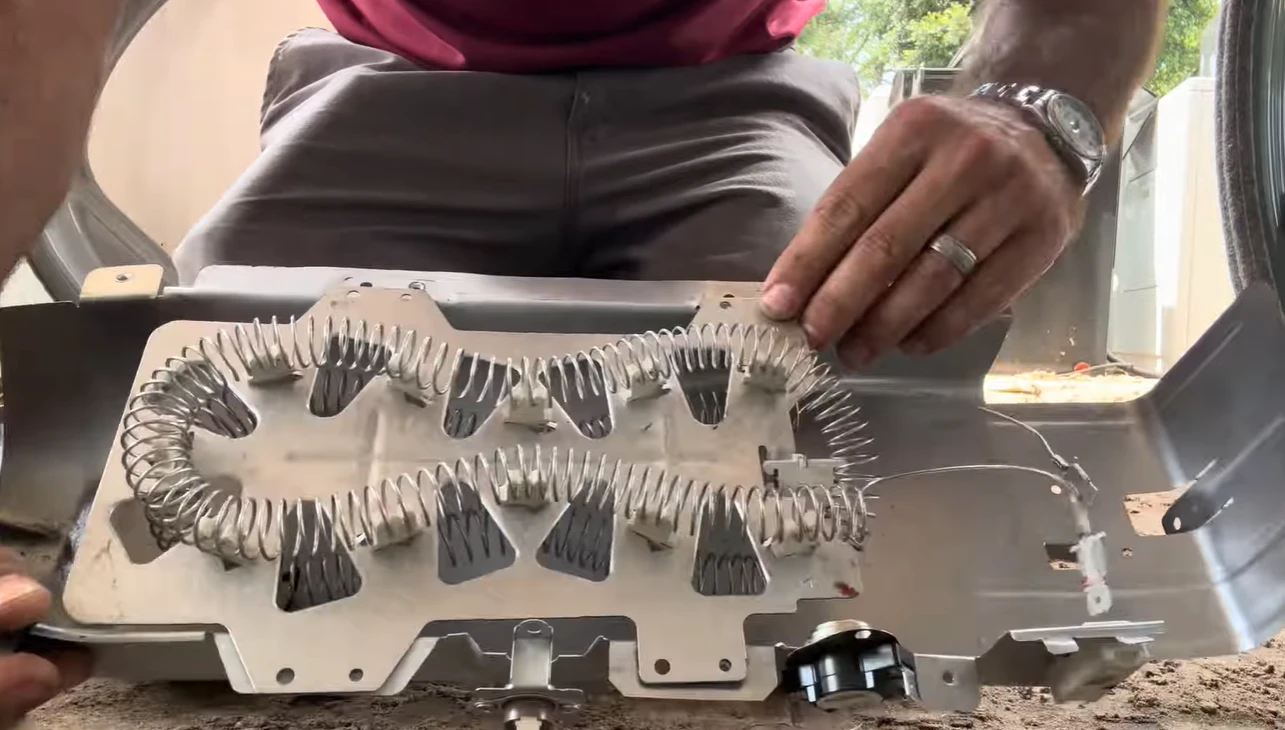
| Heater: element, or gas igniter, valve coils, flame sensor and burner | Make the heat | No heat | Element or gas igniter |
| Thermostats and thermal fuse | Control the heat and guard against overheating | No heat, too hot, or no start | Thermostats and fuse |
| Moisture sensor | Tells the dryer when the clothes are dry | Cycles end early or run long | Moisture sensor |
| Door switch and latch | Stop the drum when the door opens | Will not start | Switches and latch |
| Control board or timer | Runs the cycle | Odd behavior or no response | Control board |
| Terminal block and cord | Bring power in | No heat, or a burned connection | Terminal block |
| Lint screen, housing and vent | Catch lint and carry the air outside | Slow drying and overheating | Vent safety |
What are the parts inside a dryer called?
The main parts are the drum and its supports, the belt and idler pulley, the motor, the blower wheel, the heater, the thermostats and thermal fuse, the moisture sensor, the door switch and latch, the control board and the lint screen and vent. Each has its own guide on this site, linked in the table above.
Where the air comes from and goes
A dryer draws air from the room around it, heats it, passes it through the drum and pushes it outside. That path, from the cabinet openings to the outside hood, is the most important thing to keep clear. A packed lint screen, a crushed duct or a stuck hood restricts it, and the dryer overheats.
Where does a dryer get its air?
A dryer pulls air from the room around it, through openings in the cabinet, heats it and pushes it through the drum and out the vent. That is why a tightly closed laundry closet with no air coming in can starve the dryer of air, and why a clear vent matters on the way out.
Electric and gas heat
| Electric dryer | Gas dryer | |
|---|---|---|
| Heat source | A heating element on a 240-volt circuit | A burner lit by an igniter, with gas valve coils and a flame sensor |
| Power | 240-volt outlet and double breaker | Standard 120-volt outlet, plus a gas supply |
| Typical no-heat causes | Breaker, thermal fuse, thermostat or element | Igniter, valve coils, flame sensor, fuse or thermostat |
See the gas versus electric repair guide for the differences in costs and safety.
How the dryer knows it is done
How does a dryer know when clothes are dry?
Older dryers use a timer, and newer ones read a moisture sensor, usually two metal bars in the drum, or the temperature of the exhaust air. When the signal says the clothes are dry, the controls end the cycle. A coated sensor or a blocked vent can make the dryer misjudge, so cycles end early or run long.
Why airflow is everything
Most dryer failures trace back to restricted airflow: the heat parts overheat and trip, the clothes stay damp and the motor strains. That is why the vent is the first thing to check, and why the vent safety guide is worth reading.
Why does a dryer need a vent?
A dryer makes hot, humid, lint-laden air, and the vent carries it outside. Without a vent, the moisture and lint would build up in the house and in the dryer, which would overheat. On a gas dryer the vent also carries combustion gases out of the home, so it must always lead outdoors.
Ventless dryers
Do all dryers need a vent?
Most do, and this site covers vented gas and electric dryers. Ventless condenser and heat pump dryers collect the moisture in a tank or drain instead of venting it outside, and their parts and repairs differ. If you are not sure which you have, the model number and the manual say, and a technician can tell at a glance.
Sources
- Your dryer’s installation and service manual, which governs over any general guidance on this page
- Plano Dryer Pros estimates of typical local repair pricing, checked against national consumer cost guides for context. See our Editorial Policy.
Frequently asked questions
What is the most important part of a dryer?
There is no single most important part, because the dryer needs heat, airflow and a turning drum together. But the vent and the lint screen decide how well everything else works, and a blocked vent causes more failures than any one part.
Does the drum turn on its own motor?
No. One motor turns the drum, through a belt, and also spins the blower wheel, so the drum and the airflow stop together if the motor or belt fails. A broken belt is the exception, where the motor runs but the drum does not turn.
Why does a dryer need both a thermostat and a thermal fuse?
The thermostats are the everyday regulators and safety stop, and they reset when they cool. The thermal fuse is a one-time backstop that blows if the temperature goes higher still. Having both means a single failed part cannot let the dryer overheat.
How long does a dryer cycle last?
It depends on the load, the setting and the airflow, and a typical cycle runs about 30 to 60 minutes. A cycle that needs far longer, or two cycles, usually means restricted airflow, and the vent should be checked.
Do gas and electric dryers have the same parts?
Mostly. The drum, belt, motor, blower, switches, sensor and vent are the same in both. The difference is the heater: an electric element on one side, and an igniter, valve coils, flame sensor and burner on the other.
Where can I read about a specific part?
The dryer parts guide links to every part with its own page, including the element, thermal fuse, motor, bearing, control board, switches and more. Start there if you already know which part you suspect.
Get your dryer working again
Call and a person will answer, or request a repair online. You get the full price in writing before any work starts.