
Home / Dryer heating element replacement
Dryer Heating Element Replacement
The drum spins but the clothes stay cold? On an electric dryer, the heating element is a prime suspect. Here is how it is tested and replaced.
Last reviewed October 11, 2026. Written and reviewed by the Plano Dryer Pros team. How we create content
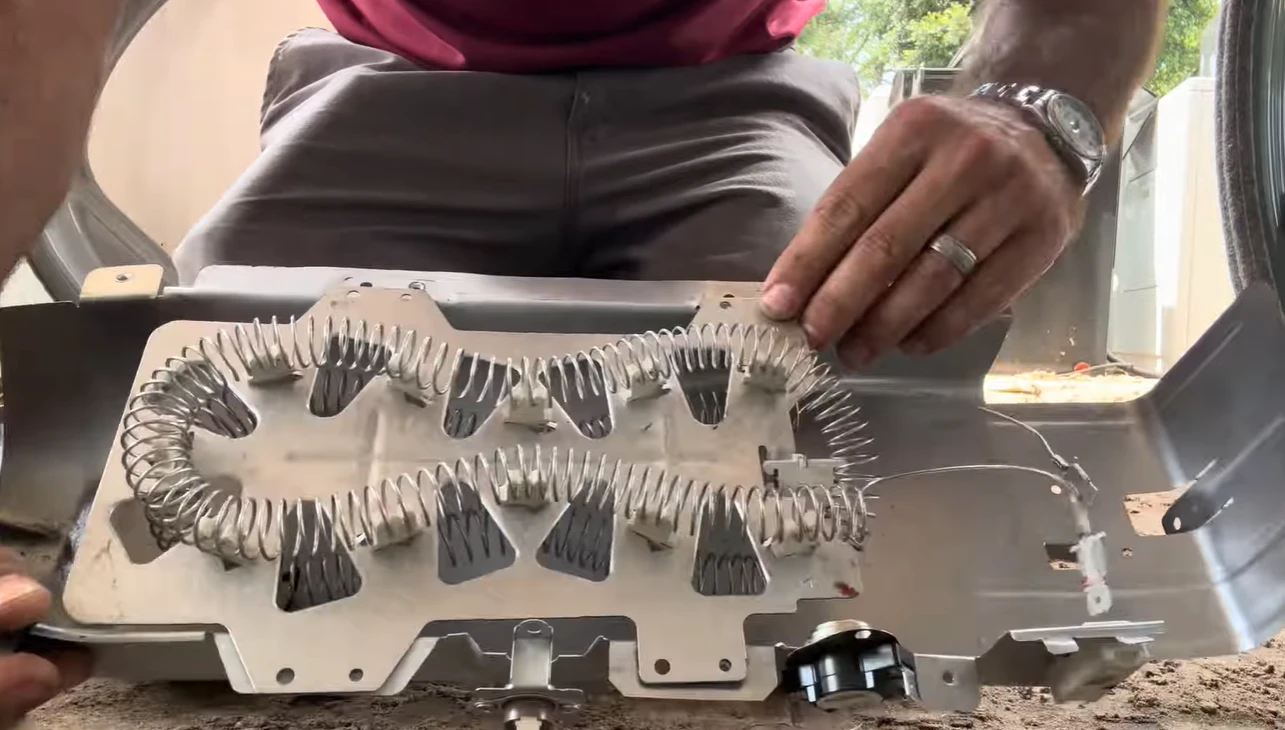
A failed heating element is one of the most common reasons an electric dryer spins but does not heat. A technician confirms it by testing the element for continuity with a meter. Replacement typically costs about $200 to $350 in the Plano area, and the vent should be cleared so the new element is not damaged by the same overheating.
Key takeaways
- Electric dryers only: gas dryers use an igniter and burner instead.
- Rule out the breaker, thermal fuse and thermostat before blaming the element.
- An element is replaced, never repaired, for about $200 to $350 in Plano.
- Clear the vent first, or the new element can burn out the same way.
What a heating element does
In an electric dryer, a coil of resistance wire heats when 240-volt current passes through it. The blower pulls room air across the coil and through the drum. Thermostats and a thermal fuse switch the heat off if the dryer gets too hot.
What does a dryer heating element do?
The heating element is a coil of resistance wire that glows hot when 240-volt current passes through it. A blower pulls room air across the coil and through the drum, which dries the clothes. Thermostats and a thermal fuse switch the heat off if the dryer overheats, so the element works as part of a protected circuit.
Signs the element has failed
| Sign | What it usually means |
|---|---|
| Drum spins, air stays cold | The heat circuit has failed, and the element is one of several suspects |
| Clothes take very long and come out only slightly warm | A partly failed element, or restricted airflow |
| A visible break or sagging in the coil | The element has failed |
| The breaker trips when heat turns on | A possible short to ground: stop using the dryer and call |
How do I know if my dryer heating element is bad?
The classic sign is a dryer that tumbles but stays cold or only slightly warm. Because a tripped breaker, blown thermal fuse or failed thermostat can look the same, the only sure way is to test the element for continuity with a meter. A visible break in the coil is also a clear sign.
Rule out cheaper causes first
| Check | Why it matters |
|---|---|
| Both halves of the double breaker | A half-tripped breaker leaves the drum spinning with no heat |
| The thermal fuse | A blown fuse cuts the heat and is a cheaper fix |
| The thermostats | A failed high-limit or cycling thermostat stops the element from getting power |
| The vent and lint screen | Restricted airflow makes the dryer overheat and trips the safety parts |
The dryer not heating guide walks through these checks in order.
How a technician tests the element
- The dryer is unplugged, or its breaker switched off, before any panel is opened.
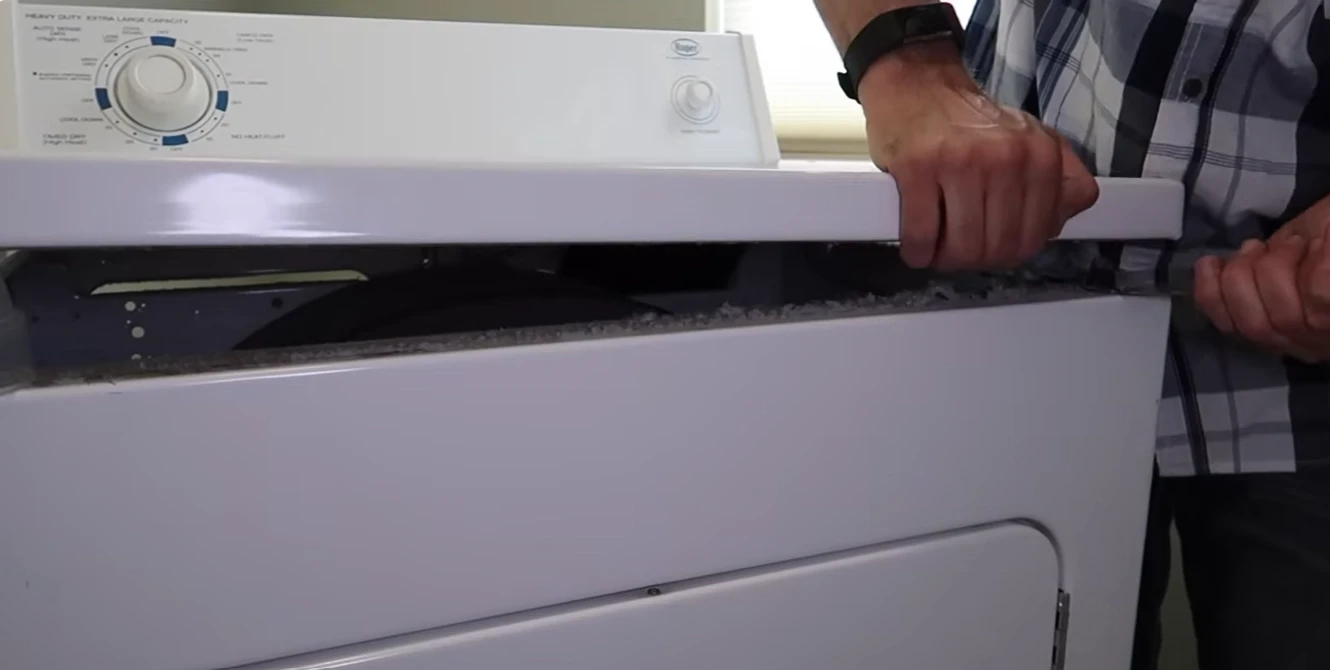
- The panel is removed to reach the heating element housing.
- The element’s wires are disconnected so it is tested on its own.
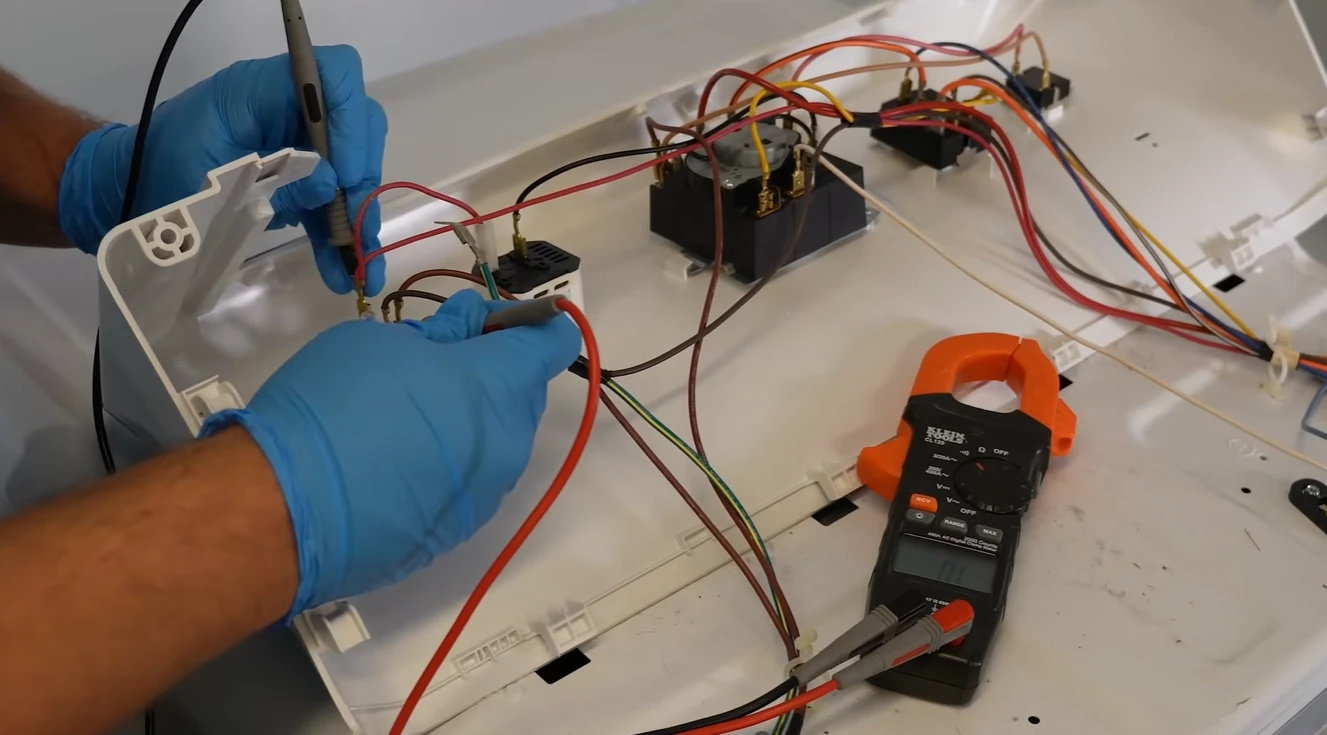
- A meter checks continuity across its terminals: a good element shows continuity, a broken one does not.
- The thermal fuse and thermostats are tested too, so the real fault is found.
How do I test a dryer heating element with a multimeter?
Unplug the dryer, open the back or bottom panel, and disconnect the element’s wires. Set the meter to continuity or resistance and touch the probes to the element’s terminals. A good element shows continuity and a broken one does not. If you are not comfortable working near 240-volt wiring, have a technician do it.
Replacing the element
The element is replaced as a unit with the exact part for the model, then the wires and panel are refitted and the dryer is run to full heat. The job is mostly about opening the dryer and testing the circuit, which is why the labor costs more than the part.
Can a dryer heating element be repaired?
No. A heating element is replaced as a unit with the exact part for your model. Patching a broken coil is not a safe or lasting fix, and the element is a modest part compared with the labor of opening the dryer. The better question is why it failed, so the vent is checked too.
Why elements burn out
- Restricted airflow from a packed vent, which lets heat build up
- Lint on the coil or in the heater housing
- Age and many heating cycles
- A failing thermostat that lets the element run too hot
What makes a new heating element burn out again?
Almost always the same cause that killed the first one: restricted airflow. A packed vent or a lint-coated heater box lets heat build up, which stresses the coil and the safety parts. Replacing the element without clearing the vent often means it fails again within weeks or months.
Is it worth replacing the heating element?
Usually yes, if the rest of the dryer is in good shape. An element is one of the more affordable heat-side repairs, typically about $200 to $375 in Plano with parts and labor, against several hundred dollars or more for a comparable new dryer. The half-price rule still applies: compare the written repair price with a new dryer. See the repair or replace calculator.
| Situation | Usual choice |
|---|---|
| The dryer is under about 10 years old and the element is the only fault | Repair |
| The dryer is 10 to 15 years old, the element is the only fault, and the price is under half a new dryer | Repair usually still wins |
| The drum is rusted, the bearing is noisy, or other parts are failing | Weigh replacing the dryer |
| The element burned out again within a year | Find the cause first: the vent or a thermostat |
Is it worth fixing a heating element in a dryer?
Usually, yes. An element is one of the more affordable heat-side repairs, typically about $200 to $375 in Plano, and it restores a dryer that is otherwise sound. Compare the written price with a comparable new dryer: if the repair is under half, and the dryer is not very old, repairing usually wins.
Gas dryers have no heating element
A gas dryer heats with a burner lit by an igniter, so there is no element to test. If a gas dryer has no heat, the usual suspects are the igniter, the gas valve coils, the thermal fuse and the vent. See how to test a gas dryer igniter and the igniter and coils guide. Gas parts sit next to the gas connection, so if you smell gas, leave the house and call 911.
What replacement costs in Plano
| Repair | Typical cost (parts and labor) |
|---|---|
| Heating element | $200 to $350 |
| Thermal fuse or thermostat | $150 to $275 |
| Vent path cleared, airflow restored | $100 to $200 |
Typical Plano-area estimates, not a quote. See the dryer repair cost guide.
What does heating element replacement cost in Plano?
Replacing a heating element typically costs about $200 to $350 in the Plano area, parts and labor included. The price depends on the brand and model, and on whether the vent also needs clearing so the new element is not damaged by the same overheating. Ask for the exact price in writing first.
Is it worth replacing the heating element in an old dryer?
Usually yes if the dryer is under about 10 to 12 years old and nothing else is failing, because an element is a modest repair. If the dryer is older, has other problems, or the repair nears half the price of a comparable new dryer, replacing the dryer may make more sense.
Sources
- Your dryer’s installation and service manual, which governs over any general guidance on this page
- Plano Dryer Pros estimates of typical local repair pricing, checked against national consumer cost guides for context. See our Editorial Policy.
Frequently asked questions
How long does a dryer heating element last?
There is no fixed lifespan. An element in a dryer with a clean vent can last for many years, while one in a dryer with restricted airflow can fail early. The number of heating cycles and the model also matter. A clean vent and lint screen help the element last.
Can a bad heating element cause the breaker to trip?
Yes. An element that has shorted to ground can trip the breaker when heat turns on. A breaker that keeps tripping means a fault, so stop using the dryer and have it tested rather than resetting it again and again.
Is it safe to use a dryer with a bad heating element?
A dead element on its own means the dryer tumbles without heating, which is not dangerous in itself. But the failure may have been caused by overheating, so check the vent and have the dryer tested. A tripping breaker or burning smell means stop using it.
Why does my dryer heat on some settings but not others?
Some dryers switch the heating circuit differently by setting, so a failing selector switch, thermostat or partly failed element can make heat work on one setting and not another. A technician can test the circuit with a meter to find which part is at fault.
Does a gas dryer have a heating element?
No. A gas dryer heats with a gas burner that an igniter lights, so it has an igniter, gas valve coils and a flame sensor instead. If you have a gas dryer with no heat, see the gas dryer igniter and valve coils guide.
Can I replace the heating element myself?
Some people do, but an electric dryer carries 240 volts, so unplug it or switch off its breaker first and follow the manual. The bigger risk is replacing the element when the real fault is a fuse or thermostat, so test the circuit before buying a part.
Is it worth fixing a heating element in a dryer?
Usually, yes, if the rest of the dryer is sound. Compare the written repair price with a new dryer: if it is under half, and the dryer is not very old, repairing usually wins.
Why does a dryer heating element keep burning out?
Almost always restricted airflow: a blocked vent makes the element run hotter and fail early. Clear the whole vent run when you replace an element.
Get your dryer working again
Call and a person will answer, or request a repair online. You get the full price in writing before any work starts.