
Home / Fix it yourself or call a technician
Fix It Yourself or Call a Technician: Dryer DIY Guide
Some dryer fixes take ten minutes and cost nothing. Others involve 240 volts or gas. Here is where the line sits, and how to decide.
Last reviewed October 1, 2026. Written and reviewed by the Plano Dryer Pros team. How we create content
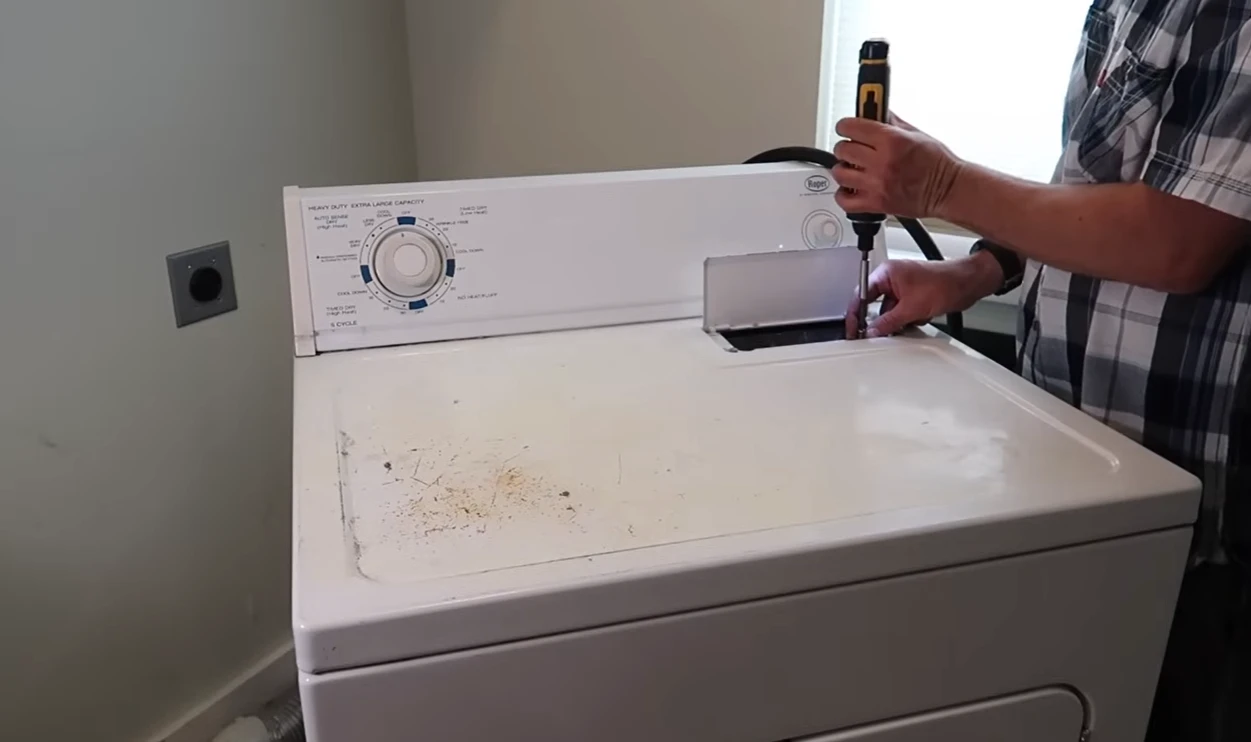
You can safely check the breaker, lint screen, vent, door latch and load size, and clean the moisture sensor, but anything involving 240-volt wiring or gas belongs to a technician. DIY pays when the part is cheap and the fix is clear. It costs more when you guess at a part and miss a second fault.
Key takeaways
- Safe checks: breaker, lint screen, vent, door, load size, moisture sensor cleaning.
- Leave 240-volt wiring, heating parts, gas parts and the control board to a technician.
- Always unplug the dryer, and close the gas valve on a gas dryer, before opening a panel.
- Guessing at parts is how a DIY fix ends up costing more than a visit.
Checks that are safe to do yourself
| Check | Why it helps | Guide |
|---|---|---|
| Both halves of the double breaker (electric dryers) | A half-tripped breaker leaves the dryer spinning with no heat | Dryer not heating |
| Lint screen, and wash it with soap and water | A film on the screen restricts airflow | Vent safety guide |
| The ten-minute vent test and the outside hood | Finds the most common cause of slow drying | Takes too long to dry |
| Door fully latched, Start held, control lock off | The simplest reasons a dryer will not start | Won’t start |
| Moisture sensor bars wiped with rubbing alcohol | Fixes many early cycle ends | Moisture sensor |
| A coin, zipper or sock in the drum or lint housing | Causes rattles and scrapes | Noisy dryer repair |
Can I fix a dryer myself?
Some fixes, yes: the breaker, lint screen, vent, door latch and moisture sensor are safe checks that solve many problems. Replacing parts inside the dryer is different, because it involves 240-volt wiring or gas. If you are unsure which part has failed, a technician’s diagnosis costs less than buying the wrong part.
Leave these to a technician
| Job | Why it is not a casual DIY |
|---|---|
| Heating element, thermostats, thermal fuse, terminal block | They sit on the 240-volt supply, and the real fault is often a blocked vent |
| Control board and wiring faults | Easy to damage, and the cheaper causes should be ruled out first |
| Gas igniter, valve coils, flame sensor, burner, connector | They are part of a gas appliance, and a mistake can leak |
| Motor, drum bearing, belt and rollers | They need the drum or cabinet opened, and parts are model-specific |
| Outlet, breaker and circuit wiring | These belong to a licensed electrician |
| Gas piping and the shutoff valve | These belong to a licensed plumber |
Is it safe to open a dryer myself?
It can be, if you unplug it first, close the gas valve on a gas dryer, and know what you are doing. An electric dryer carries 240 volts even when it is off, and a gas dryer has a gas connection. If you are not comfortable, or the fault involves heat or gas parts, leave it to a technician.
Safety rules before you open anything
- Unplug the dryer, or switch off its breaker, and confirm the power is off with a meter.
- On a gas dryer, close the shutoff valve, and if you smell gas, leave the house and call 911 and Atmos Energy.
- Wait for hot parts to cool, and wear gloves, because sheet metal edges are sharp.
- Never bypass a thermal fuse, thermostat or door switch.
- Photograph the wiring before you disconnect anything.
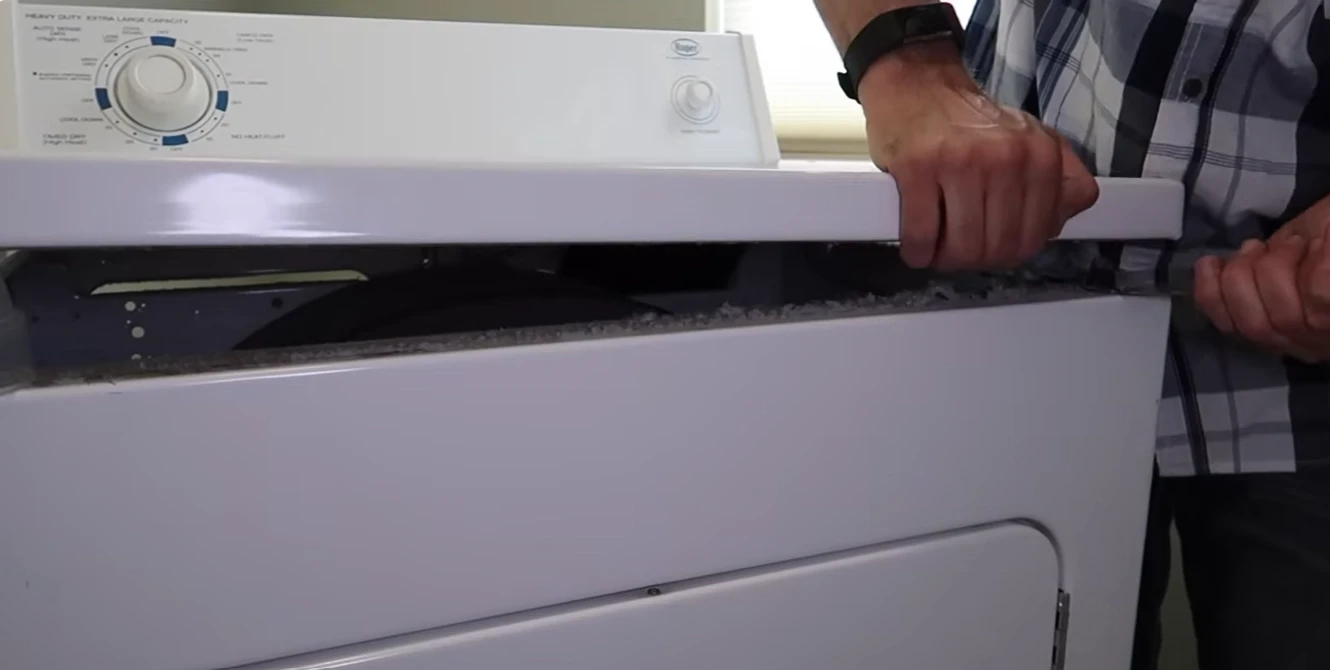
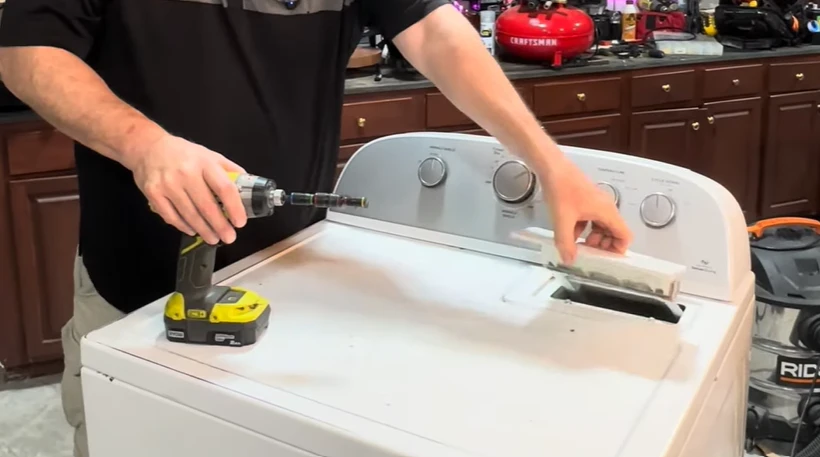
Basic tools
- A multimeter that reads continuity and resistance
- A nut driver and screwdriver set, and a putty knife for top panels
- A vacuum with a long, narrow attachment, and a flashlight
- Gloves and eye protection
- The dryer’s model number and manual
What tools do I need to repair a dryer?
At a minimum a multimeter that reads continuity, a nut driver and screwdriver set, a putty knife for the top panel, a vacuum with a narrow attachment, gloves and a flashlight. You also need the model number to buy the right part. A meter is the key tool, because testing beats guessing.
When DIY costs more
The expensive DIY mistakes are replacing a part that was not the fault, missing a second fault such as a blocked vent, and fitting the wrong part for the model. A thermal fuse replaced without clearing the vent blows again in weeks. A technician’s diagnosis includes the test that avoids that.
Is it cheaper to fix a dryer myself?
Sometimes, for simple parts and a clear diagnosis. It costs more when you guess: a part you did not need, a second visit for the real fault, or a part that does not fit. Typical Plano repairs run about $150 to $400, and a diagnosis plus the right part once is often the cheaper route.
How do I decide between DIY and a technician?
Ask three questions. Is the check visible and low risk, like a lint screen or a vent? Does the fix involve 240 volts or gas? Do I know which part has failed? If it is low risk, do it. If it involves electricity, gas or a guess, call a technician. See the repair or replace guide too.
What it costs in Plano
The checks above cost nothing. For repairs, typical Plano-area estimates are about $100 to $200 for a cleared vent, $150 to $275 for a thermal fuse or thermostat and $200 to $375 for a heating element or gas igniter or coils. See the dryer repair cost guide and how dryer repair works.
Sources
- Your dryer’s installation and service manual, which governs over any general guidance on this page
- Plano Dryer Pros estimates of typical local repair pricing, checked against national consumer cost guides for context. See our Editorial Policy.
Frequently asked questions
Can I fix a dryer that is not heating myself?
You can check the breaker, the lint screen and the vent, which are the usual first causes. Finding the failed heating part needs a meter and works on a 240-volt or gas circuit, so most people hand that step to a technician.
Can I replace a thermal fuse myself?
Some people do, but the fuse blew because the dryer overheated, usually from a blocked vent, so the vent has to be cleared too. Never bypass the fuse. If you are not sure of the part or the cause, have it tested first.
Does DIY repair void my warranty?
It can. Manufacturer warranties often require authorized service, and work by someone else may affect coverage. If your dryer is still under warranty, contact the manufacturer first, and keep records of anything you check.
Is it safe to repair a gas dryer myself?
Only the non-gas checks are casual, such as the lint screen, vent and door. Anything in the gas train, such as the igniter, valve coils, burner or connector, should be left to a professional. If you smell gas, leave the house and call 911.
What is the first thing to try when a dryer stops working?
Check that it is plugged in and the breaker is on, with both halves on an electric dryer. Then check the door latch and control lock, and the lint screen and vent. These steps solve a surprising number of calls.
When should I stop and call a technician?
Stop if you smell gas or burning, find burned wiring, are unsure which part failed, or need to open the 240-volt or gas side. Also stop if a part keeps failing, because that points to an underlying cause.
Get your dryer working again
Call and a person will answer, or request a repair online. You get the full price in writing before any work starts.