
Home / Blog / How to test a dryer thermal fuse
How to Test a Dryer Thermal Fuse (and Why It Keeps Blowing)
A blown thermal fuse is a two-minute test with a meter, and the real question is why it blew. Here is the test, the reading and the likely cause.
Last reviewed October 1, 2026. Written and reviewed by the Plano Dryer Pros team. How we create content
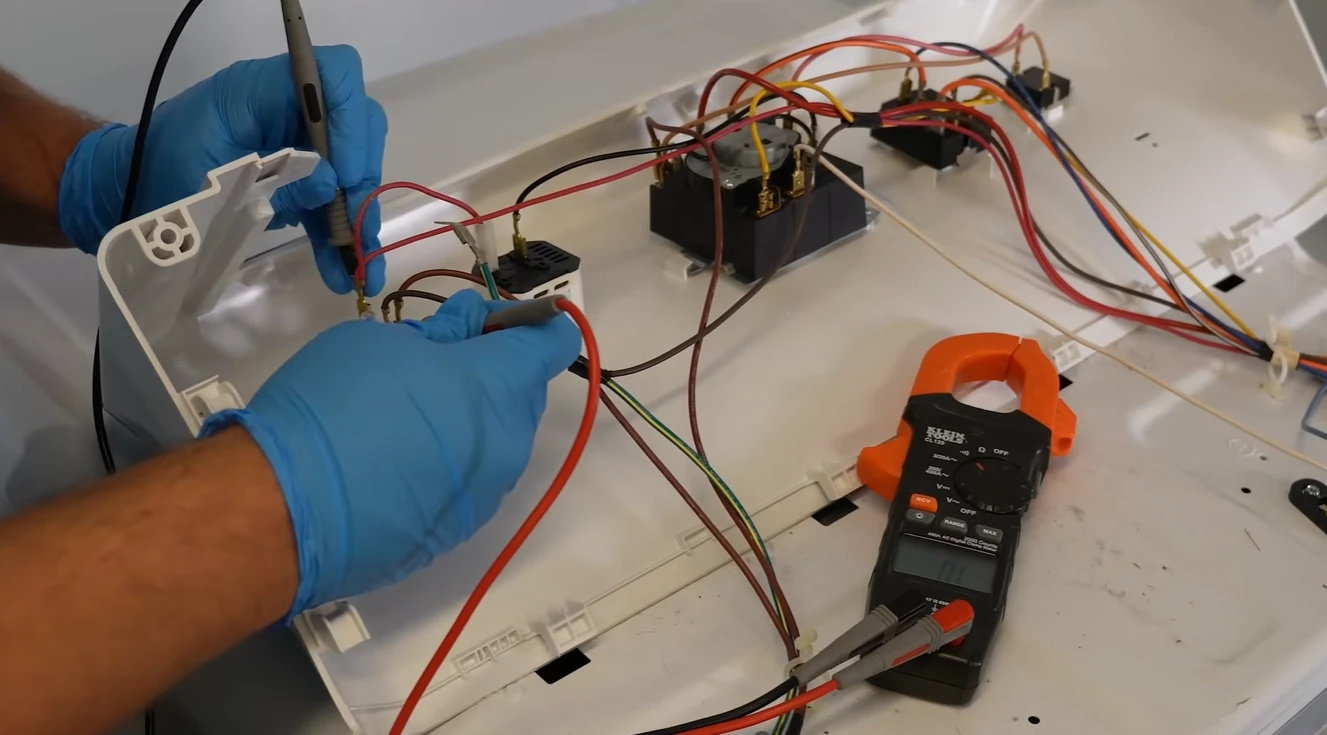
To test a dryer thermal fuse, unplug the dryer, disconnect the fuse’s wires and touch a multimeter’s probes to its two terminals on the continuity setting. A good fuse shows continuity, and a blown one shows none. The fuse usually blew because a blocked vent overheated the dryer, so clear the vent before fitting a new one.
Key takeaways
- Unplug the dryer first: it carries 240 volts even when off.
- Test with a multimeter on continuity: no continuity means the fuse has blown.
- A blown fuse almost always means the dryer overheated, usually from a blocked vent.
- Never bypass the fuse, and clear the vent before replacing it.
What a thermal fuse does
The thermal fuse is a one-time safety part. If the dryer gets too hot, it blows to cut power to the heater, and on some models to the whole dryer. Unlike a thermostat, it does not reset, so a blown fuse leaves the dryer without heat, or dead, until it is replaced. The full picture is in the thermal fuse and thermostat guide.
What you need
- A multimeter that has a continuity setting
- A nut driver or screwdriver to open the panel
- Your dryer’s manual or a parts diagram for the fuse location
- A flashlight and a way to photograph the wiring
How to test it, step by step
- Unplug the dryer or switch off its breaker, and on a gas dryer close the gas valve.
- Find the fuse: it is a small white or beige part with two terminals, often on the blower housing or near the heater. The location varies by model.
- Photograph the wires, then pull them off the terminals.
- Set the meter to continuity, or to the lowest resistance setting.
- Touch a probe to each terminal.
- Read the result. A beep or a reading near zero ohms means the fuse is good. No beep, or an infinite reading, means it has blown.
How do I test a dryer thermal fuse with a multimeter?
Unplug the dryer, disconnect the fuse’s wires, set the meter to continuity and touch the probes to the fuse’s two terminals. A beep or a reading near zero ohms means the fuse is good, and no beep or an open reading means it has blown. If you are not comfortable working near 240-volt wiring, have a technician do it.
What reading should a good thermal fuse show?
A good thermal fuse shows continuity, which is a beep or a reading near zero ohms, because it is simply a closed switch. A blown fuse reads open, with no beep or an infinite reading. Test with the dryer unplugged and the wires disconnected, because a connected circuit can give a false reading.
Why the fuse keeps blowing
A thermal fuse blows because the dryer overheated, and the usual cause is restricted airflow from a blocked vent. Replacing the fuse without clearing the vent fixes the symptom for a few weeks. Other causes include a failed thermostat that let the heat climb, or a restricted blower. Run the ten-minute vent test from the vent safety guide before fitting a new one.
Why does my dryer thermal fuse keep blowing?
Because the dryer keeps overheating, and the most common reason is a blocked vent. Lint in the duct, a crushed hose or a stuck outside flap traps heat. A failed thermostat or a restricted blower can also cause it. Clear the whole vent run and test the thermostats, and never bypass the fuse.
Can a thermal fuse test good and still be the problem?
If it shows continuity at room temperature it is not blown, but a dryer with no heat can have other faults: the breaker, a thermostat, the heating element or igniter, or the wiring. Test each in turn. See the dryer not heating guide for the order to check them.
When to call a technician
Call if you smell burning, if the fuse blows again after the vent is clear, if you are unsure which part is the fuse, or if the dryer is gas and you are not comfortable working near it. Typical Plano cost for a thermal fuse or thermostat repair is about $150 to $275, and clearing a vent about $100 to $200. See the cost guide.
Sources
- Your dryer’s installation and service manual, which governs over any general guidance on this page
- Plano Dryer Pros estimates of typical local repair pricing, checked against national consumer cost guides for context. See our Editorial Policy.
Frequently asked questions
Is it safe to test a thermal fuse myself?
It can be, if you unplug the dryer first, close the gas valve on a gas dryer and use a meter correctly. The dryer carries 240 volts, so if you are not comfortable, have a technician do the test. Never bypass the fuse.
Where is the thermal fuse located?
It varies by brand and model. On many dryers it sits on the blower housing or near the heating element or burner. Your manual or a parts diagram for your model number is the reliable guide to where yours is.
Can I use a jumper wire instead of a new fuse?
No. The fuse is the safety part that stops an overheating dryer, so removing it takes away the protection against fire. If a fuse keeps blowing, find and fix the cause, which is usually the vent.
How much does a thermal fuse cost?
The part itself is inexpensive. Typical Plano repairs for a thermal fuse or thermostat run about $150 to $275, parts and labor, and clearing the vent is about $100 to $200. Ask for the exact price in writing.
Will a new thermal fuse fix my dryer?
Only if the fuse was the fault and the cause of the overheating is fixed too. If the vent is still blocked, the new fuse can blow within weeks. Clear the vent and test the thermostats when you replace it.
Get your dryer working again
Call and a person will answer, or request a repair online. You get the full price in writing before any work starts.