
Home / Dryer repair for renters and landlords FAQ
Dryer Repair for Renters and Landlords FAQ
Who pays, who calls and who gives access? Twenty-eight short answers for Plano renters and landlords, with a note on what is legal advice and what is not.
Last reviewed October 1, 2026. Written and reviewed by the Plano Dryer Pros team. How we create content
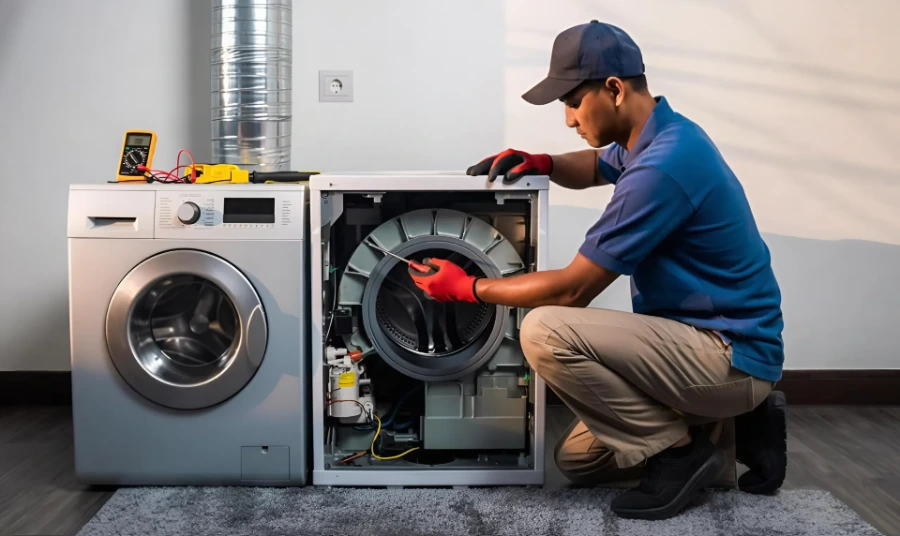
This FAQ answers 28 questions for Plano renters and landlords on who pays for dryer repair, how to report a problem, access, invoices, safety and moving. Your lease usually decides who handles a provided dryer. Report problems in writing and ask for the price in writing. This is general information, not legal advice.
Key takeaways
- Your lease usually decides who handles repairs on a dryer that came with the rental.
- Report problems in writing, with the date, a description and a photo of the model tag.
- Gas smells, burning smells and hot outlets are safety issues: stop and report at once.
- This is general information, not legal advice. For legal questions, consult a lawyer or tenant resource.
Who is responsible
Who pays for dryer repair in a rental?
It depends on your lease and on who owns the dryer. If the landlord provided it as part of the rental, the lease usually makes the landlord responsible for repairs. If you own it, you do. Check the lease, and ask in writing if it is unclear. This is general information, not legal advice.
Is my landlord required to fix a broken dryer?
If the dryer came with the rental, the lease normally decides, and many landlords repair provided appliances. Texas has repair rules, mainly for conditions that affect health or safety, and a gas leak or an electrical hazard is a different matter from a dryer that simply will not heat. Ask a lawyer or tenant resource for advice on your case.
What if the dryer was there when I moved in?
Treat it as the landlord’s unless the lease or the move-in paperwork says otherwise. Check your lease and your move-in inspection report, and note any problems in writing early. If the dryer was listed as included, repairs are usually the landlord’s to arrange.
Can I repair a landlord’s dryer myself?
Not without permission. Working on a landlord’s appliance can create liability, and a poor repair can cause damage you are blamed for. Report the problem and ask the landlord to approve a repair. Leave anything involving 240-volt wiring or gas to a professional.
What if I caused the damage?
If the dryer broke from misuse or damage, such as overloading, a spill or physical damage, the lease may make you responsible. Be honest when you report it, because a technician can usually tell. Normal wear is generally different from damage, and the lease and Texas law set the rules.
What if the lease says nothing about the dryer?
Ask the landlord in writing and keep the reply. A lease that is silent leaves it to what the landlord and tenant agree, so get that agreement on paper. Photograph the dryer and note its condition, so there is a record of how it was when you moved in.
Getting it fixed
How should I report a broken dryer to my landlord?
In writing, with the date, a clear description of what the dryer does, a photo of the model tag and any photos of the problem. Keep a copy. A written report starts the clock, and it helps the technician if the landlord sends one. Email or the property portal is better than a phone call alone.
How long should I wait for a response?
Your lease may say, and landlords vary, so there is no single number. Follow up in writing after a few days if you hear nothing. For anything involving gas, burning or a hot outlet, do not wait: stop using the dryer and report it at once.
Can I hire my own repair company?
Ask the landlord first. Hiring your own company without approval may leave you with the bill, because the landlord may not reimburse it. If the landlord agrees, get that in writing, including who pays and what price is approved, before the visit.
Should the landlord choose the repair company?
The landlord usually arranges repairs on provided appliances and may have preferred vendors. That is normal. You can ask for the price and the warranty, and you can ask who is coming and when. Make sure someone can give access on the day.
What information helps a technician?
The dryer’s model number, whether it is gas or electric, what it does and when it started, and whether it is stacked or in a closet. Photos of the model tag and the problem save time. Tell them if you are a tenant, so the visit can be planned around access.
What if the landlord refuses to repair it?
Keep records of your requests and replies, and re-read the lease. For legal questions, consult a lawyer or a local tenant resource, because the answer depends on your lease and Texas law. If the problem is a gas smell or an electrical hazard, leave the area and call the utility or 911.
Access and scheduling
Do I need to be home for the repair?
An adult should be there to give access, show the dryer and see the finished work, or the landlord can arrange access with your written permission. Tell the company beforehand who will be there, and keep pets out of the way.
Can a landlord send a technician in when I am out?
Your lease and Texas law set the rules for entry and notice, so check them. Many leases allow entry for repairs with reasonable notice. If you prefer to be home, tell the landlord and agree on a time window in writing.
What should I do about a stacked dryer in a closet?
Clear a path to the closet, move anything stored in front of it and make sure the technician can reach the dryer and the outlet. A stacked unit takes longer to work on, so tell the company it is stacked when the visit is booked. See stackable dryer repair.
Who do I call about a shared laundry room?
The property manager. Shared machines are the property’s responsibility, and tenants usually should not call a repair company themselves. Report the problem with the machine’s location or number, what it does and a photo, and keep a record of when you reported it.
Costs and invoices
Who gets the invoice for a rental dryer repair?
Whoever booked and approved the repair. If the landlord arranges it, the invoice goes to the landlord. If you book it with approval, ask for an itemized invoice in writing, which you can pass to the landlord. Always get the price in writing before work starts.
Can a landlord deduct dryer repair costs from my deposit?
Only in limited cases, such as damage you caused beyond normal wear, and the rules are in your lease and Texas law. Ask for an itemized explanation of any deduction. For a dispute, consult a lawyer or a tenant resource. This is general information, not legal advice.
What does a dryer repair cost?
Most Plano dryer repairs cost about $150 to $400, parts and labor included, and clearing a vent about $100 to $200. A landlord weighing repair against replacement can use the guidance in the repair or replace guide. These are estimates, not a quote.
Is it cheaper for a landlord to replace an old dryer?
If the repair nears half the price of a comparable new dryer, or the dryer is over about 12 years old and needs a major part, replacing is often smarter. The landlord decides. A tenant can ask whether a repair or a replacement is planned, so there is no long wait.
Does renters insurance cover a landlord’s dryer repair?
Usually not. Renters insurance typically covers your belongings and liability, not the repair of an appliance the landlord owns. Check your policy, and ask your agent if you are unsure. The landlord’s own insurance does not usually pay for ordinary wear and tear either.
Safety in a rental
What should I do if I smell gas in my rental?
Leave at once, avoid switches, and from a safe distance call 911 and Atmos Energy at 866.322.8667. Then tell the landlord or property manager. Do not use the dryer until it has been checked. See what to do if you smell gas.
What if my rental dryer smells like burning?
Stop the dryer, unplug it and do not use it again. Report it to the landlord in writing as a safety issue, and ask for it to be checked quickly. A burning smell can mean lint scorching or a failing part, and either can start a fire.
Who cleans the dryer vent in a rental?
The lease and the landlord decide. A tenant normally clears the lint screen each load, and the landlord or the building usually arranges the duct clearing. Ask in writing, and report slow drying early. See the vent safety guide.
What if the dryer outlet is hot or scorched?
Stop using the dryer and report it to the landlord at once. A hot plug or a scorched outlet can mean a loose connection that can start a fire, and it is an electrician’s job. Unplug the dryer if you can do so safely, and do not use it until the outlet is inspected.
Moving in and moving out
Can I bring my own dryer to a rental?
Check the lease and the hookups first. The laundry area must have the right supply: a 240-volt outlet for an electric dryer, or a gas line and a 120-volt outlet for a gas dryer, and a vent to the outside. Some leases or buildings restrict machines, so ask in writing.
Can I take my dryer when I move out?
If you own it, yes, but leave the hookups safe: disconnect the gas or power properly, cap the gas line if needed, and tell the landlord. If the landlord’s dryer came with the unit, it stays. A professional should handle a gas disconnection.
Is it worth buying a dryer for a rental?
It depends on how long you will stay, whether the unit has the hookups and whether you can take the dryer with you. A used or modest dryer you can move may suit short stays. Ask first about the landlord’s policy and the venting.
Sources
- Your dryer’s installation and service manual, which governs over any general guidance on this page
- Plano Dryer Pros estimates of typical local repair pricing, checked against national consumer cost guides for context. See our Editorial Policy.
- Atmos Energy gas emergency guidance (866.322.8667)
Get your dryer working again
Call and a person will answer, or request a repair online. You get the full price in writing before any work starts.